Living in Hanoi
Hanoi is not HCMC. It is slower, more conservative, more traditionally Vietnamese, and has a completely different rhythm. If you are trying to decide between the two cities, understanding what Hanoi actually looks and feels like as a long-term home is essential.
Cost of Living Breakdown
Hanoi vs HCMC: The Cost Difference
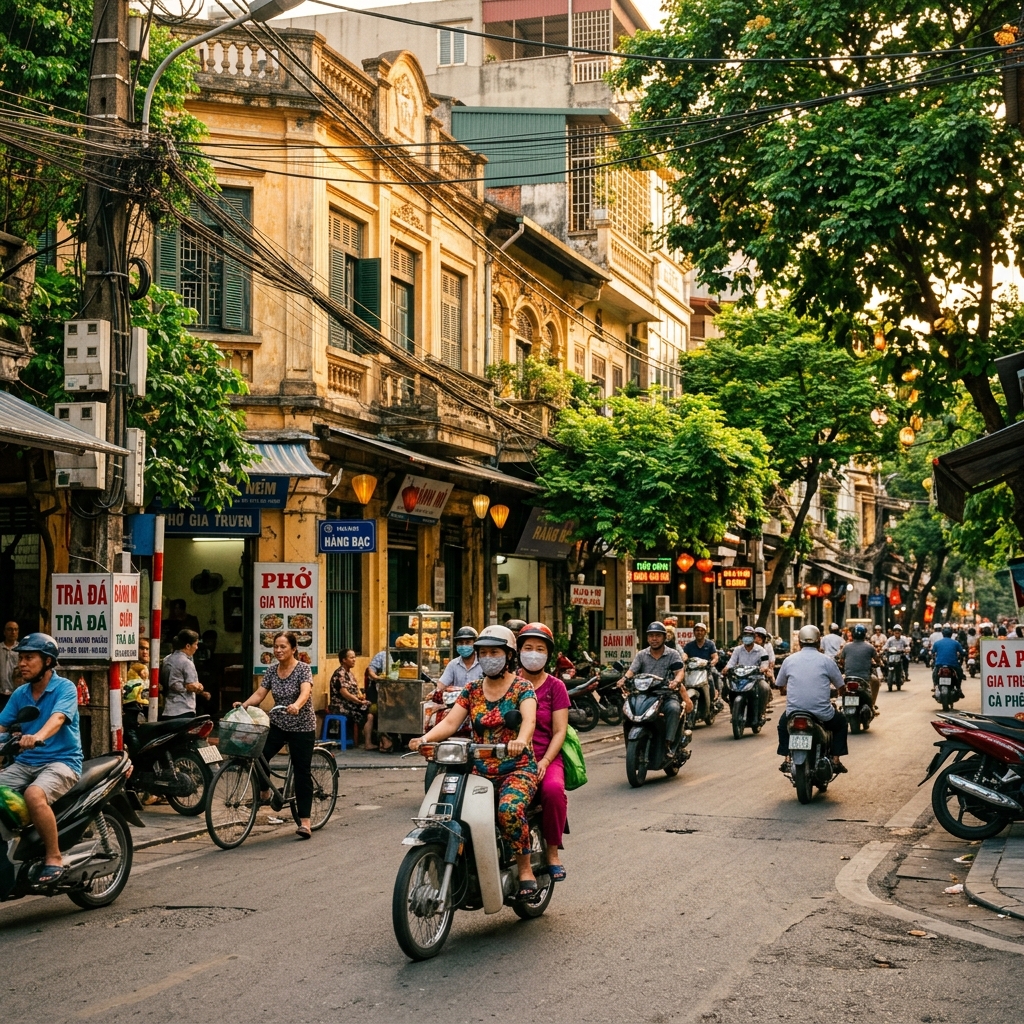
Hanoi is generally 10-20% cheaper than HCMC at a comparable standard of living. Rent is the biggest difference, you get more space for less money outside the Old Quarter and Tay Ho. Food is slightly cheaper on the street. Transport costs are similar. What Hanoi lacks in terms of cost advantage is the density of income opportunities, fewer corporate clients, fewer international businesses, and a slightly smaller expat economy mean the earning side can be harder too.
The other cost factor unique to Hanoi: winter clothing. January and February in Hanoi drop to 10-15°C, occasionally colder. You will need actual jackets and layers, which adds a one-time cost if you arrive from a tropical climate or have been living in HCMC. Most of the year is warm to hot, but the winter months are genuinely cool.
Rent by Area
| Area | 1-Bedroom Range | Notes |
|---|---|---|
| Old Quarter (Hoan Kiem) | $350-700 | Touristy, loud, great location |
| Tay Ho (West Lake) | $500-1,400 | Expat hub, international schools, best quality of life |
| Ba Dinh | $300-550 | Government district, quieter, local feel |
| Dong Da | $250-450 | University area, young, good local food scene |
| Cau Giay | $300-550 | Tech and university corridor, modern apartments |
| Long Bien | $200-380 | Across the Red River, very local, cheap, inconvenient |
Food Costs: The Hanoi Difference
Street food in Hanoi is measurably cheaper than HCMC. A bowl of pho, which is Hanoi's signature dish, not the sweetened southern version, costs 40,000-65,000 VND ($1.75-2.75) at a proper local pho shop. Bun cha (grilled pork with noodles, the dish Anthony Bourdain ate with Obama) runs 45,000-70,000 VND. Banh mi from a good cart is 20,000-30,000 VND. You can eat extremely well on $150-200/month if you commit to local food.
Hanoi's Western food scene is smaller than HCMC's but has been developing fast. The Tay Ho area has a reasonable concentration of expat cafes, Western restaurants, and international supermarkets (AEON, Big C, and imported goods stores). Expect to pay $8-20 for a Western meal in the expat zones.
The hidden cost of Hanoi that nobody talks about is the air quality. During winter months, particulate pollution in Hanoi can be severe. If you care about air quality, you are potentially looking at an air purifier for your apartment ($150-400 one-time), masks for daily commuting, and the general health cost of long-term exposure. This is not unique to Hanoi among Asian cities, but it is genuinely worse than HCMC. Check IQAir's Hanoi readings before you commit.
Neighborhoods &
Where to Live

The Old Quarter: Great to Visit, Hard to Live In
Hanoi's Old Quarter is one of the most visually striking urban areas in Southeast Asia. The 36 Guild Streets, each originally dedicated to a trade, create a dense, atmospheric, medieval-feeling city center. The lake (Hoan Kiem), the pagodas, the narrow tube houses and the chaotic traffic are genuinely fascinating for the first month or two.
Living there long-term is a different story. It is loud (motorbikes, karaoke, tourists 24 hours), the apartments are often older with thin walls, and landlords in this area know they have leverage. It is a good area for a few weeks when you first arrive. Most experienced expats relocate to Tay Ho or Ba Dinh once they know the city.
Tay Ho (West Lake): The Expat Neighborhood
Tay Ho is Hanoi's equivalent of Thao Dien in HCMC. The West Lake waterfront has cafes, international schools (Hanoi International School, United Nations International School of Hanoi, British International School Hanoi), Western restaurants, running paths around the lake, and a large community of expats, primarily from Europe, the US, South Korea, and Japan.
The main streets, Dang Thai Mai, Tay Ho, Xuan Dieu, are lined with the kind of infrastructure that makes expat life comfortable: wine shops, bakeries, yoga studios, specialty coffee, international pharmacies. Rent is the highest in the city outside of luxury serviced apartments, but for the quality of life it offers, most long-term Hanoi expats with children end up here.
If you do not have kids and are not on a company package, consider the neighborhoods just south of Tay Ho - Ba Dinh and Truc Bach - which have similar access to the lake and expat infrastructure at 20-30% lower rent.
Cau Giay and Dong Da: Local Living
Cau Giay is Hanoi's university and tech district. It is younger, more dynamic, and has better modern apartment options for the price compared to the Old Quarter. The food scene is exceptional, competing student restaurants and local lunch spots drive quality up and prices down. The MY DINH stadium area gives it a sports hub vibe on match days.
Dong Da is Hanoi's most densely populated district, a mix of Vietnamese residential life, good local markets, and university campuses. It is cheap, local, and well-connected. Not much expat infrastructure, which is either appealing or not depending on your priorities. If you want to actually learn Vietnamese and live a Vietnamese life, Dong Da or Cau Giay gives you that immersion in a way that Tay Ho cannot.
Hanoi's housing market is seasonal, September is popular because of the international school intake, which can push rents up in Tay Ho. January-March is often the best time to negotiate. Most expat housing in Hanoi is found through Facebook groups ("Hanoi Expats", "Hanoi Accommodation"), local real estate agents, or word of mouth. Always test the hot water, check the windows for cold-season insulation, and ask specifically about heating, many older Hanoi apartments have neither central heating nor proper insulation, making winter nights genuinely cold.
Visa, Work &
Legal Basics
Visa Reality in the Capital
Vietnam's visa rules are national, not city-specific. The same e-visa (90 days, multiple entry, $25) that works for HCMC works for Hanoi. The same work permit process applies everywhere. However, Hanoi has some nuances worth knowing for people applying for formal work permits and registering businesses.
Hanoi is the administrative capital. Many government visa offices, immigration authorities, and official processes are based or centralized here. If you are going through a formal work permit process for a government organization, an international NGO, or a diplomatic mission, Hanoi is the center of that bureaucracy. Processing at government offices in Hanoi can be faster for some visa types simply because the central offices are here, not because the rules are different.
Work Permits and Hanoi Employment
The main categories of foreign workers in Hanoi break down differently from HCMC. While HCMC has more private sector business, Hanoi has more:
- International NGO and UN agency staff - Many international organizations have their Vietnam headquarters in Hanoi. These positions often come with proper work permits, competitive salaries, and full benefits packages. Harder to get but well worth it if you have the background.
- Government-partnership programs - Language assistance programs, exchange teachers, and bilateral educational programs operate more prominently from Hanoi given its capital status.
- Embassy and consulate staff - All foreign embassies are in Hanoi (consulates are in HCMC). This creates a significant professional expat community with specific lifestyle needs.
- English teachers - Same as HCMC but the market is somewhat smaller. English centers, public schools, and international schools all hire. Pay is comparable.
Hanoi is more conservative than HCMC in how it treats foreign workers operating in informal gray zones. Police checks, resident registration enforcement, and general bureaucratic attention is higher in the capital. If you are teaching without a work permit or running a business without proper registration, your risk is higher in Hanoi than in HCMC. This does not mean it never happens, it does, regularly. It means the risk calculus is different.
Teaching &
Working in Hanoi
The Hanoi Teaching Market
Teaching in Hanoi works similarly to HCMC but with some important differences in scale and character. The market is smaller, there are fewer centers and fewer international schools, but demand for quality English teachers remains consistent because Hanoi's population of university students, government workers, and ambitious young professionals wanting better English is enormous.
Pay rates are comparable to HCMC: $15-25/hr at centers, $2,000-5,000+/month at international schools. Private tutoring rates run $18-35/hr depending on your experience and the client. Corporate English training in Hanoi has good demand given the concentration of government ministries, state-owned enterprises, and international organizations. If you can get into corporate training, rates of $30-50/hr are achievable.
Key International Schools in Hanoi
- Hanoi International School (HIS) - IB curriculum, well-established, strong reputation
- British International School Hanoi (BIS) - English National Curriculum, strong community
- United Nations International School of Hanoi (UNIS) - UN-affiliated, IB, excellent compensation
- Concordia International School Hanoi - American curriculum, church-affiliated
- Vinschool Thang Long - Vietnamese-international hybrid, growing fast
UNIS Hanoi is considered one of the top-paying international schools in Vietnam. Getting a position there is competitive and requires strong credentials, but the compensation package (salary + housing + flights + insurance) can exceed $5,000-7,000/month for experienced teachers.
Beyond Teaching: Other Income in Hanoi
- Content creation - Hanoi's Old Quarter, seasonal beauty, and contrast with HCMC creates strong content. YouTube channels focused on northern Vietnam, traditional culture, and Hanoi daily life perform well.
- NGO and development work - If you have a background in international development, public health, education policy, or human rights, Hanoi has more job openings in these areas than anywhere else in Vietnam.
- Translation and interpretation - High demand in the capital for English-Vietnamese professionals in legal, government, and business contexts. Usually requires near-native Vietnamese.
- Hospitality and F&B - Fewer expat-facing opportunities than HCMC but the Old Quarter and Tay Ho tourist economy creates consistent demand for English-speaking front-of-house staff and managers.
Daily Life in
Hanoi
The Rhythm of Hanoi Life
Hanoi moves differently from HCMC. It is calmer, more deliberate, and more tied to seasons and tradition. The city shuts down significantly around Tet (Vietnamese New Year, late January or early February), more so than HCMC. Public spaces like Hoan Kiem Lake and the Old Quarter feel genuinely communal, evening walks around the lake are a real cultural institution, not just a tourist activity.
The daily rhythm for most Hanoi expats involves: coffee at a local cafe in the morning (egg coffee is a Hanoi original), navigating traffic by motorbike or Grab, eating at local street spots or markets at lunch, and using the Tay Ho or Old Quarter infrastructure for evenings. The city gets noticeably colder from November through February, which changes the feel entirely, fog, jackets, hot soup, and the kind of atmospheric beauty that makes Hanoi one of the most photogenic cities in Asia.
Getting Around Hanoi
- Grab - Works as well as in HCMC. Standard for daily transport. GrabBike is primary for short distances.
- Motorbike - Essential for anyone staying 3+ months. Hanoi's streets are denser and sometimes harder to navigate than HCMC but manageable. The ring roads (Vanh Dai 2 and 3) are the main arteries.
- Metro Line 2A - Running from Cat Linh to Ha Dong. Limited coverage still but it is a real metro and it works. More lines are under construction.
- Walking - The Old Quarter is genuinely walkable for short distances. The lake area is pleasant on foot in the evenings.
- Xanh SM - VinFast taxis now well-established in Hanoi. Good alternative to Grab for car rides.
Healthcare in Hanoi
Hanoi's private healthcare infrastructure is not as developed as HCMC's, but it is solid for expat needs. The key facilities:
- Vinmec International Hospital - Times City location is the flagship. Best overall standard in the city.
- Hanoi French Hospital - Long-established French-Vietnamese hospital, good reputation, international staff
- Family Medical Practice Hanoi - Tay Ho area. Standard expat GP clinic, good for routine care and vaccinations
- SOS International Clinic - Good for emergency care and 24-hour access
Get health insurance before you arrive. Same providers as HCMC, Cigna, AXA, Pacific Cross all operate here. A hospital visit for something routine (infection, injury, stomach issue) at a private expat clinic costs $40-100. Emergency care at Vinmec can run significantly higher.
If you ask most foreigners to compare the two cities, you get a split verdict. Hanoi people tend to love the history, the seasons, the food, the more measured pace, and the sense of living in an ancient capital. HCMC people love the energy, the warmer weather year-round, the bigger expat scene, and the higher income potential. Neither is objectively better. It depends on who you are. If you are over 40, value tradition, and want genuine Vietnamese culture, Hanoi often wins. If you are younger, want nightlife and career opportunities, and need it to be warm all year, HCMC usually wins.
Exploring Hanoi
Hanoi is one of the most layered cities in Asia. The food, the history, the lakes, the Old Quarter, and the day trips into some of Vietnam's most dramatic scenery make it a city that rewards time and curiosity.
Food & Hanoi's Culinary Identity
Pho: The Original
Pho is a Hanoi dish. The southern version you get in HCMC is sweeter, with more garnishes and bean sprouts. Hanoi pho is more austere, clear, clean broth, minimal additions, the quality is in the stock itself. Finding good pho in Hanoi means finding a shop that has been making it the same way for 20-30 years. Look for the places with no English menu, queues at 7am, and soup that takes 12+ hours to make.
Some honest recommendations: the pho spots on Bat Dan Street and Hang Dong Street in the Old Quarter are consistently good and run by families who have been doing this for decades. Pho Thin on Lo Duc (slightly out of the tourist zone) is the most famous in the city. Arrive early, good pho shops in Hanoi run out by 10am. This is not for dramatic effect. They genuinely sell out.
The Essential Hanoi Dishes
- Bun cha - Grilled pork patties and fatty pork in a sweet-savory broth, served with bun noodles and herbs. This is Hanoi's street lunch. The best spots are on Hang Manh and the streets around the Old Quarter. 45,000-75,000 VND.
- Banh cuon - Steamed rice rolls filled with minced pork and mushroom, topped with fried shallots. Delicate, light, eaten for breakfast. One of the most underrated Vietnamese dishes. Hang Ga Street has good options.
- Cha ca - Turmeric-marinated fish cooked at the table in oil with dill and spring onion. Served with rice noodles, peanuts, and shrimp paste. Hanoi's signature complex dish. Expensive by local standards ($8-15) but worth it. Cha Ca La Vong on Cha Ca Street is the institution (since 1871).
- Egg coffee (ca phe trung) - Giang Cafe on Nguyen Huu Huan is where it was invented. A thick, rich egg yolk and condensed milk cream sits over strong drip coffee. Have at least one. Giang Cafe is the original; the alley entrance is part of the experience.
- Nem ran / spring rolls - The northern version is different from the southern. Crispier, tighter, less heavy. Good at virtually any proper Hanoi restaurant.
- Bun rieu - Crab and tomato noodle soup. More complex than it sounds. Best in the Old Quarter in the mornings from street vendors.
The Coffee Culture
Hanoi's coffee culture is slower and more contemplative than HCMC's. The preferred setting is a low plastic stool on a sidewalk or at a small table tucked into a narrow old house. Ca phe den (black coffee) brewed in a traditional phin filter is the local choice, strong, dark, often drunk while watching the street. The egg coffee (ca phe trung) that Hanoi invented is now a national thing, but Hanoi does it best.
Cong Ca Phe is worth visiting at least once for its retro-communist aesthetic, shelves of old Vietnamese war-era items, wooden furniture, and a milk coffee served in a coconut shell. Quirky, popular, and genuinely its own thing. For specialty coffee, The Workshop equivalents in Hanoi include Tranquil Books & Coffee (Yen Thanh St) and Matchbox Coffee in Tay Ho.
Nightlife &
The Bar Scene
Ta Hien Street: The Backpacker Corner
Hanoi's equivalent of Bui Vien is Ta Hien Street and the surrounding streets in the Old Quarter. It is smaller, less extreme, and slightly more manageable than Bui Vien. Cold Hanoi Beer (bia hoi, the fresh local draft) for 5,000-10,000 VND per glass is the draw. Plastic stools on the sidewalk, travelers from everywhere, locals occasionally mixed in. It is loud, it is fun for one night, and it gets old quickly.
What Ta Hien has that Bui Vien lacks is a bit more local character at the edges, walk one or two streets away from Ta Hien and you find actual Hanoi residents eating and drinking at local spots that do not know tourists exist.
The Tay Ho and Old Quarter Bar Scenes
- Hanoi Social Club - Hoi Vu Street. Multi-floor bar and music venue with a bohemian feel. Live music most nights, craft beer, international food. Best for a relaxed night with other expats.
- Summit Lounge, Pan Pacific Hotel - Best rooftop views in Hanoi. $8-15 cocktails. Worth one visit for the panorama over Tay Ho lake and the city.
- Bia Hoi Corner (Ha Dinh / Luong Van Can junction) - The most famous bia hoi spot in Hanoi. Tourist-heavy but genuine. 5,000-15,000 VND per glass of fresh beer.
- Savage - Hip hop, urban, local Vietnamese nightlife crowd. If you want to see how Hanoi's younger generation parties, this is more representative than the expat bar scene.
- Tay Ho Bar Street (Dang Thai Mai) - Several expat bars and wine bars in a row. Lower key, older expat crowd, better for conversation than dancing.
The Honest Picture
Hanoi's nightlife is calmer than HCMC. The city is more conservative and the bar scene reflects that. It closes earlier (most places wind down by 1-2am), it is more neighborhood-social than club-culture, and the energy is lower-key overall. For some people that is ideal. For others it feels like a disappointment after HCMC. Know which type you are before you choose to base yourself here.
Things to Do
& See in Hanoi
The Non-Negotiables
- Hoan Kiem Lake and Ngoc Son Temple - The heart of Hanoi. Walk the lakeside path in the morning or evening when locals exercise, play badminton, and gather. Ngoc Son Temple on the island is accessed via the red Huc Bridge. 30,000 VND entry. One of the most beautiful small temple settings in Vietnam.
- Temple of Literature (Van Mieu) - Vietnam's first university (1070 AD). Five connected courtyards leading to a beautiful pavilion complex. Genuinely ancient and well-preserved. 40,000 VND. Best visited on a weekday morning before tour groups arrive.
- Ho Chi Minh Mausoleum Complex - The embalmed body of Ho Chi Minh is on display (closed for maintenance 2-3 months each year; check before you go). The mausoleum, his stilt house, the Presidential Palace, and the One Pillar Pagoda are all in the same complex. Budget 2-3 hours. Dress modestly. Arrive early, line forms before opening.
- Hoa Lo Prison (Hanoi Hilton) - The infamous prison where French colonial authorities held Vietnamese political prisoners, and later where American POWs were held. Thoughtful museum, well-curated, sobering. 30,000 VND. Located in the city center near Hoan Kiem.
- Vietnam Museum of Ethnology - One of the best museums in Vietnam. Full-scale traditional houses from Vietnam's 54 ethnic minority groups in the outdoor section. Main building has excellent cultural exhibitions. Underrated. Cau Giay district. 40,000 VND.
- The Old Quarter walking circuit - The 36 streets, named after the guilds that occupied them. Hang Gai (silk), Hang Bac (silver), Hang Dao (silk again), and the surrounding lanes. Best walked in the early evening when the light is golden and the streets are full.
What to Skip
- Cyclo rides in the Old Quarter - Same as HCMC: no agreed price upfront, aggressive overcharging at the end. Avoid unless you want the confrontation experience.
- Most organized walking tours of the Old Quarter - You do not need a guide to walk the Old Quarter. Save the $15-25 and do it yourself.
- Night markets near Dong Xuan - Mostly cheap Chinese goods with tourist prices. Not worth your time unless you specifically want fake goods.
Day Trips &
The North's Best Escapes

Ha Long Bay: Do It Right
Ha Long Bay is one of Vietnam's most famous attractions and one of the most over-toured. 3,000+ limestone karsts rising from emerald water, it is genuinely stunning. The problem is that 99% of tours run from Hanoi and the budget options pack 40+ people onto a boat with mediocre food and a tourist convoy experience that takes away most of what makes the bay special.
The solution: overnight cruise on a proper boat. Budget minimum $80-120/person for a decent 2-day/1-night cruise. Better options like Paradise Cruise, Era Cruise, or Stellar of the Seas run $150-300/person but the difference in quality, smaller boats, better food, less crowded kayaking areas, is significant. Even better: consider Lan Ha Bay instead, which is adjacent to Ha Long, equally beautiful, and has a fraction of the boat traffic. April-October for best weather; December-February can have fog and occasional drizzle (which is actually beautiful but you cannot kayak as much).
Ninh Binh: Ha Long Bay on Land
Ninh Binh is 2 hours south of Hanoi and is, in my opinion, more beautiful than Ha Long Bay for what you can actually do there. The limestone karst terrain is identical but you are on land, on a bicycle, and on a small wooden boat rowed through flooded rice fields and caves. The main sites, Trang An (UNESCO listed), Tam Coc ("Ha Long Bay on land"), and the Hoa Lu ancient capital, can be done in a long day trip or a comfortable overnight.
Rent a bicycle in Tam Coc town and cycle 15km to Bich Dong Pagoda through rice paddies at sunrise. You will have seen almost nobody by the time most tour groups are still having breakfast. Ninh Binh is one of the genuinely underrated experiences accessible from Hanoi, the short distance and lower tourist saturation compared to Ha Long makes it consistently better value.
Sapa and Northern Highlands
Sapa is a 5-hour overnight train or 5.5-hour bus from Hanoi. The terraced rice fields of the Muong Hoa Valley, the Fansipan summit (highest point in Indochina at 3,143m), and the villages of the Black Hmong, Red Dao, and other ethnic minority communities make this one of the most visually compelling destinations in Southeast Asia.
Sapa town itself has been significantly over-developed for tourism, mostly mid-range hotels and Western restaurants catering to Vietnamese domestic tourists. The draw is the hiking and the village homestays. Spend 2-3 nights minimum. Go September-October for golden rice harvest terraces or March-April for green planting season. The cable car to Fansipan summit exists but removes most of the achievement of the climb, decide what you want before you go. Genuine trekking with a local guide costs $20-40/day and reaches villages most cable car tourists never see.
Hoa Binh and Mai Chau
Four hours west of Hanoi. Mai Chau Valley is a flat green bowl surrounded by low mountains, inhabited primarily by the White Thai ethnic minority. It is calm, green, genuinely rural, and almost entirely free of the tourist overcrowding that affects Sapa. A homestay in a traditional stilt house on the valley floor, cycling through rice paddies, and eating a Thai ethnic dinner with the host family for $15-25/person is one of the best and most accessible rural Vietnam experiences. Good as a 1-night weekend escape from Hanoi.
Hidden Gems &
The Real Hanoi

Places Tourists Almost Never Find
- Long Bien Bridge at sunrise - The 1902 French-built bridge is both a functioning railway bridge and a path that locals use to commute and sell vegetables. Crossing it on foot or bicycle in the early morning, with the Red River below and the mist over the water, is one of the most atmospheric things you can do in Hanoi. Free. 5:30-7am is the right time.
- Train Street - The narrow lanes of Hang Bong and Le Duan where the Hanoi-Ho Chi Minh City train passes within inches of the buildings. It was closed to tourists for a period but at time of writing is accessible from the De Tomma Bar end. Go 15 minutes before train times (typically around 3:45pm and 7:30pm southbound). The train speed and closeness to the buildings is genuinely shocking the first time.
- Dong Xuan Market interior - The famous market is always on tourist maps but most visitors only see the street-level stalls. The upper floors of Dong Xuan are wholesale levels, textiles, hardware, household goods, all priced for Vietnamese traders. Wander up and you see a completely different market from the tourist-facing ground floor.
- Quan Thanh Temple at dawn - One of Hanoi's Four Sacred Temples. Located at the northwest corner of Tay Ho. At 6-7am when locals come to pray and the incense is heavy and the lake is misty, it is a genuinely moving religious space. 10,000 VND entry. Almost no tourists at this hour.
- Bach Ma Temple - Hidden inside the Old Quarter, one of the oldest temples in Hanoi (dating to the 11th century). Small, slightly hard to find (on Hang Buom Street), genuinely historical. Mostly unknown to tourists.
What Hanoi Feels Like After 6 Months
Long-term expats in Hanoi develop a deep attachment to the city that is harder to explain than HCMC's appeal. It is slower and takes longer to penetrate. The Vietnamese in Hanoi are more reserved, warm but less immediately open than in the south. Learning even basic Vietnamese matters more here than in HCMC, because the expat infrastructure is thinner and the payoff from connecting with locals is proportionally higher.
The seasons genuinely change Hanoi. A Hanoi October, when the weather finally cools and the streets fill with persimmon and pomelo sellers, is one of the most beautiful times to be in any city in Asia. January mist on Hoan Kiem Lake is something you carry with you for years. The city rewards the people who stay long enough to see it across seasons and stop comparing it to other places.
The Hanoi vs HCMC debate is one of the most common questions I get. My honest take: Hanoi is the better city to understand Vietnam. HCMC is the better city to build a life. Hanoi gives you depth, history, culture, and proximity to some of the most extraordinary regions in the country. HCMC gives you opportunity, energy, and scale. If you can, spend real time in both before you decide where to base yourself.
Need Personalized Help Moving to Vietnam?
Book a 30-minute one-on-one consultation with KT, 6 years of Vietnam experience, straight answers, no fluff.
Book a consultation Get the Free Relocation Guide