Living in Saigon
The real breakdown of expat life in Ho Chi Minh City. Not the travel blog version. The version that tells you what things actually cost, which neighborhoods to avoid, and how to set your life up without wasting months figuring it out the hard way.
Cost of Living
Breakdown

What HCMC Actually Costs in 2025
The number you see online, "$500 a month in Vietnam" - is not a lie, but it's also not the full story. Yes, you can technically live on $500 a month in Saigon if you eat nothing but local food, live in a tiny room in a local neighborhood, and never go out. Most foreigners are not going to do that, and if they do, they usually stop after a few months.
The real number depends entirely on your habits. If you cook at home, eat Vietnamese food, take Grab bikes, and live outside the expat districts, you can live comfortably for $1,000-1,200 a month. If you want a proper Western-style apartment, eat out at a mix of local and Western spots, and enjoy some nightlife on weekends, plan for $1,500-2,000. If you want a gym membership, regular weekend trips, air-conditioned comfort 24/7, and regular Western meals, you are looking at $2,500-3,500.
The thing that surprises most people is how quickly small upgrades add up. One coffee from The Coffee House every morning is fine. A Western breakfast at a cafe every day will run you $150+ a month without you noticing. That is the Saigon trap, individual items are cheap, but lifestyle creep happens fast.
Housing: The Biggest Variable
| Type | Location | Monthly Cost |
|---|---|---|
| Studio / local room | Go Vap, Binh Chanh | $200-350 |
| 1-bedroom local apt | D3, D5, Binh Thanh | $350-550 |
| 1-bedroom Western-style | D1, D3, Phu Nhuan | $550-900 |
| 2-bedroom expat apt | Thao Dien, D2 | $900-1,800 |
| Serviced apartment | D1, Thao Dien | $1,500-4,000+ |
Rent is usually the biggest budget item. The District 2 / Thao Dien area has inflated significantly over the past few years due to expat demand and international schools. You can find a solid 1-bedroom in a great location for $400-600 if you look outside the obvious foreigner zones.
Food: The Honest Numbers
| Meal Type | Where | Cost |
|---|---|---|
| Com tam (local lunch) | Street stall or basic restaurant | 40,000-70,000 VND (~$2-3) |
| Pho or bun bo | Local shop | 50,000-80,000 VND (~$2-3.50) |
| Lunch at a mid-range cafe | D1, D3 | 100,000-180,000 VND (~$4-7) |
| Western restaurant meal | Expat areas | 200,000-450,000 VND (~$8-18) |
| Beer at a local bar | Anywhere | 20,000-35,000 VND (~$1-1.50) |
| Beer at a Bui Vien bar | Walking Street | 50,000-100,000 VND (~$2-4) |
If you eat local food regularly, your food budget can be $150-250 a month even while eating out most meals. That includes morning coffee, lunch, and dinner at Vietnamese places. Once you start mixing in Western spots, that number climbs fast. Weekly Western dining can push your food budget to $400-600 without much effort.
Transport Costs
- Grab Bike (GrabBike) - Most short trips under 5km will cost 20,000-40,000 VND ($1-1.75). Budget $50-80/month if you use it daily for local travel.
- Grab Car - Airport runs, longer distances. 80,000-200,000 VND ($3-9) depending on distance. Adds up if used regularly.
- Own a motorbike - Best long-term option. $500-1,200 to buy a decent used Honda Wave or Yamaha. Running costs (gas, minor repairs) are $30-60/month. You need a valid license or at minimum a Vietnamese license.
- Taxi / Xanh SM - Similar to Grab car pricing, sometimes slightly cheaper. VinFast electric cabs are now widely available.
- No useful metro yet - Line 1 is now running in HCMC but coverage is still limited. Do not plan your life around it.
Other Monthly Costs to Budget For
| Category | Budget Range |
|---|---|
| Electricity (incl. AC) | $30-120 depending on AC use |
| Internet (fiber, fast) | $10-20/month |
| Sim card / mobile data | $5-15/month |
| Gym membership | $25-60/month (local gym to California Fitness) |
| Health insurance (basic) | $50-150/month depending on coverage |
| Vietnamese language class | $40-120/month depending on frequency |
| Entertainment / weekend activities | $100-400 depending on lifestyle |
One thing that catches new expats off guard: electricity bills. HCMC is hot 12 months a year. If you run air conditioning all night, every night, your electricity bill can be $80-120/month. Some apartments have separate meters, some landlords include it. Always clarify this before you sign anything. I have heard stories of people getting surprise $200 electricity bills because their contract said utilities were "included" but had a cap they did not know about.
Realistic Monthly Budget Templates
| Category | Budget ($1,100) | Mid-Range ($1,800) | Comfort ($2,800) |
|---|---|---|---|
| Rent | $350 | $600 | $1,000 |
| Food | $200 | $350 | $600 |
| Transport | $60 | $100 | $150 |
| Utilities | $50 | $80 | $120 |
| Entertainment | $100 | $300 | $500 |
| Healthcare/misc | $100 | $200 | $300 |
| Savings buffer | $240 | $170 | $130 |
Neighborhoods &
Where to Live
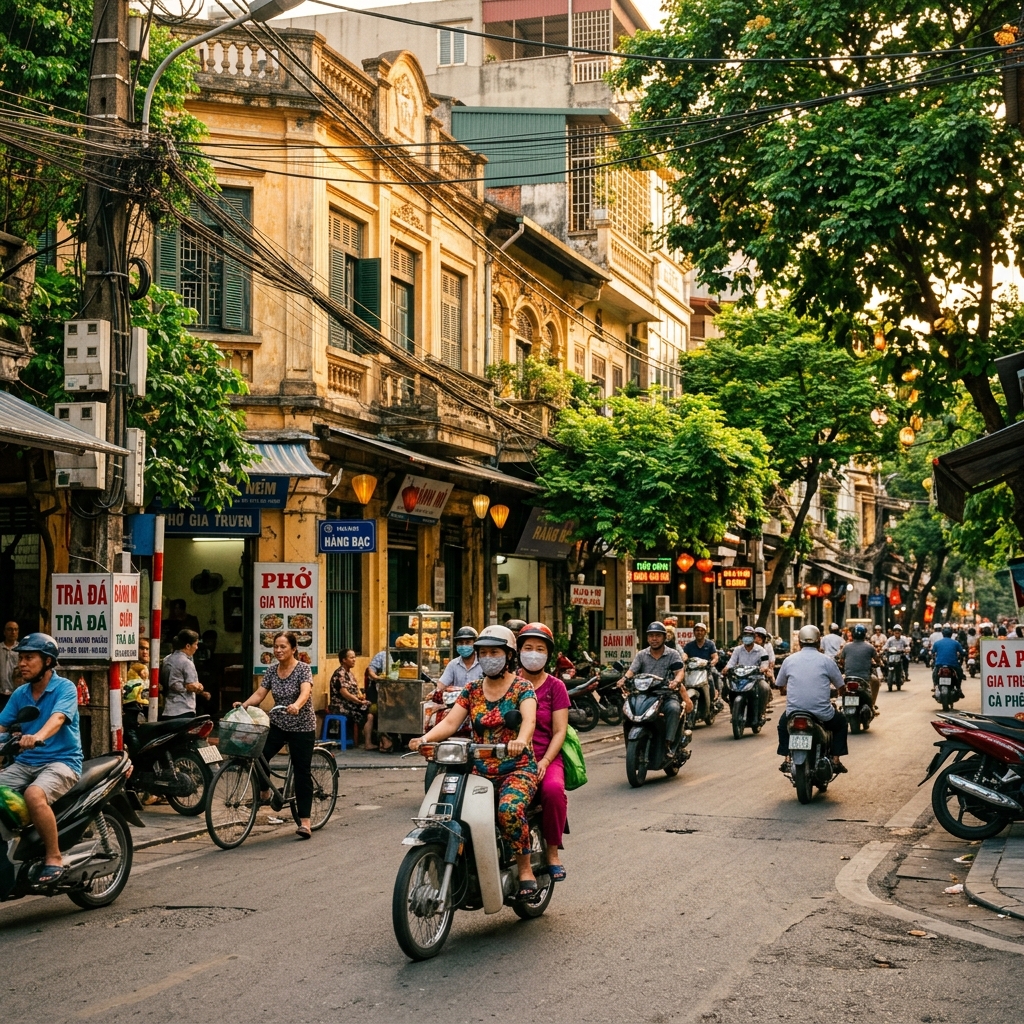
Understanding HCMC's Layout
Saigon is big, loud, and dense. It does not have a clean grid or an obvious center. What it has is a loose cluster of districts radiating out from District 1, which is the old tourist and business center. The closer you are to D1, the more you pay and the more foreigner infrastructure you have access to. The further out, the cheaper and more local it gets.
Most expats end up in one of four areas: District 1, District 3, Thao Dien (technically part of Thu Duc City, formerly D2), or Binh Thanh. Each one attracts a different type of foreigner for different reasons. None of them is the best choice for everyone.
District 1: Central, Convenient, Overpriced
District 1 is where you land when you first arrive. It has the big hotels, the tourist bars, Ben Thanh Market, major government buildings, and the best access to the rest of the city. It is useful for your first few weeks. Most people who live there long-term are either on company expense accounts or have not figured out better options yet.
Rent in D1 is 30-50% higher than comparable apartments in surrounding districts for no good reason other than location prestige. The traffic is terrible, the noise is constant, and you will get charged tourist prices at almost every shop and restaurant within walking distance. Good for short stays. Not ideal for long-term living on a budget.
Thao Dien (Thu Duc City / Former D2): Expat Central
This is the main expat enclave in HCMC. It has international schools, Western supermarkets, rooftop pools, expat bars, and a large community of foreigners from all over the world. If you have kids, or want a strong expat social scene, this is where you will end up.
The downside: it is expensive and it does not feel like Vietnam. You can live an entirely Western life in Thao Dien without ever eating Vietnamese food or speaking to a local Vietnamese person. That is fine if you want it. But if you moved to Vietnam to experience Vietnam, this is not the right choice. Expect to pay $700-1,500+ for a decent apartment here. An Phu and Thao Dien are the main sub-areas, An Phu is slightly calmer.
District 3: The Sweet Spot
If I had to recommend one district for a new expat who wants real local life with enough infrastructure to stay comfortable, D3 is it. It sits right next to D1, so you have easy access to everything, but rents are lower, the streets are more manageable, and the neighborhood feels more authentic. You get a mix of local coffee shops, street food, and decent Western options without being completely immersed or completely isolated.
Rent for a solid 1-bedroom in D3 is $450-700. You are close to the War Remnants Museum, several good markets, and you can walk or bike to D1 in 15 minutes. This is where I would tell most solo expats to start.
Binh Thanh: The Up-and-Comer
Binh Thanh sits just north of D1, across the Thu Thiem Bridge or through the Dien Bien Phu corridor. It has been developing fast over the past 5-7 years. You will find a mix of modern apartment towers and older local streets. The Landmark 81 area (Vinhomes Central Park) is one of the nicer residential zones in the city.
Binh Thanh is good value if you are willing to be slightly further from the tourist center. Rent is $350-800 depending on how modern you want your apartment. The area around Dinh Tien Hoang and Nguyen Xien streets has good local food and a more neighborhood feel. Traffic during rush hour heading into D1 can be rough.
Phu Nhuan: The Underrated Choice
Most newcomers skip Phu Nhuan and I think that is a mistake. It is a small, calm district that borders D3 and Tan Binh. The streets are quieter, the local market scene is good, and rent is reasonable - $350-600 for a 1-bedroom in most parts. It does not have a big expat scene, which is exactly why some people love it. If you want to actually live among Vietnamese people, speak Vietnamese, and eat local, Phu Nhuan delivers that without being inconveniently far from the city.
Go Vap and Binh Chanh: Budget Territory
Go Vap is working-class, dense, and cheap. Rooms start at $180-280. It is not particularly foreigner-friendly in terms of infrastructure, finding an English-speaking landlord is harder, and you will be navigating a much more local environment. Binh Chanh is even more outer-ring, often used by budget travelers who want to save maximum money. Both are fine if you know what you are getting into, but I would not recommend them as a starting point for someone new to Vietnam.
Always negotiate rent, most landlords expect it. Ask for a 1-3 month discount if you commit to a long lease. Always inspect the water heater, WiFi speed, and water pressure before signing. Ask explicitly who pays electricity and at what rate. Some landlords charge above the government rate (currently around 3,300 VND/kWh). Get everything in writing, even if it feels overly formal for Vietnam. Check Batdongsan.com.vn, Facebook expat groups, and local real estate agents. Avoid committing to anything for more than 1-3 months when you first arrive.
Visa, Work &
Legal Basics
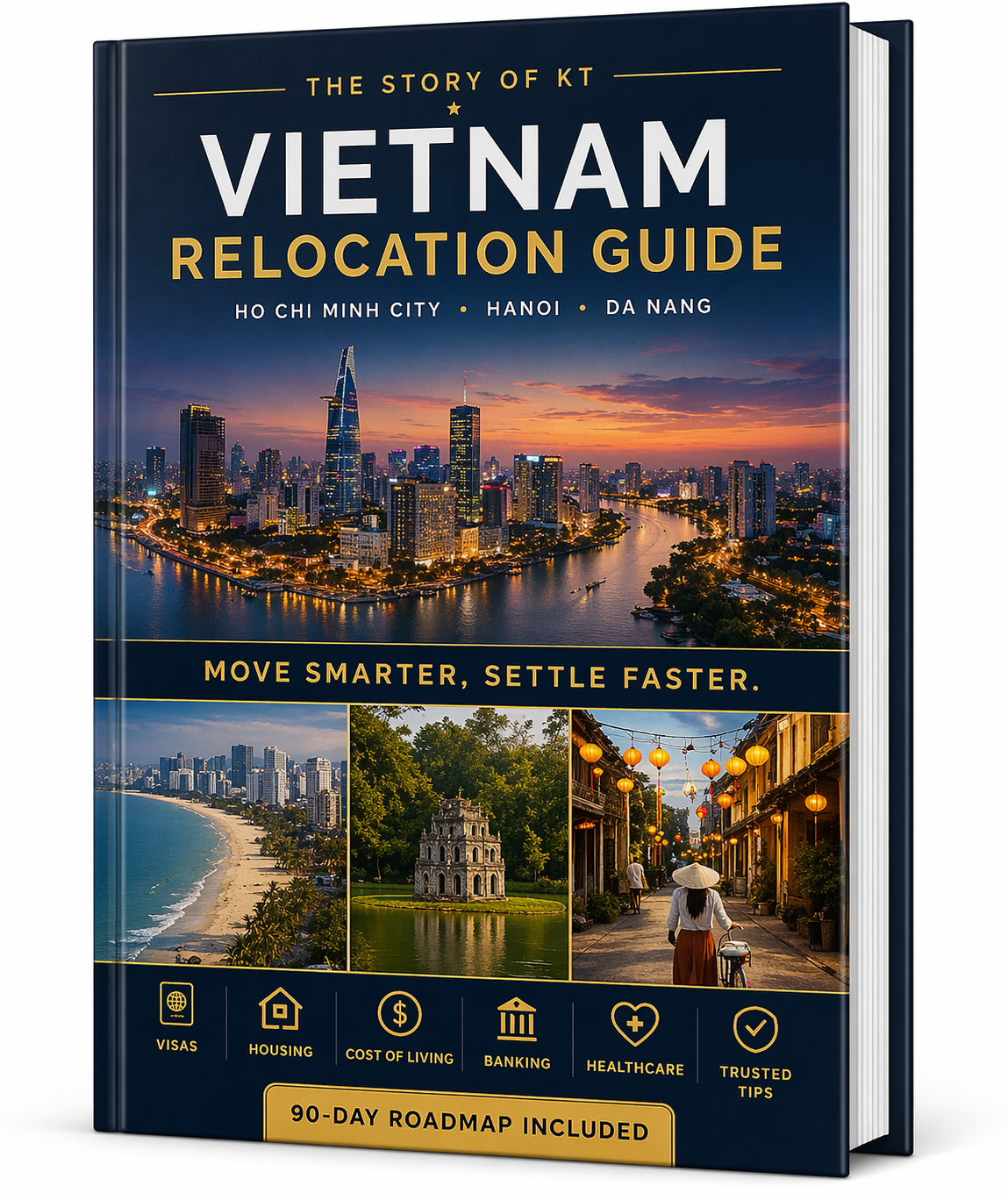
The E-Visa: Where Most People Start
Vietnam's e-visa is now 90 days, multiple entry for citizens of most countries including the US, UK, Australia, Canada, and most of Europe. This is a major upgrade from the old 30-day single entry. You apply online at evisa.xuatnhapcanh.gov.vn, pay $25, and get your visa emailed to you within 3 business days (usually faster). This is the easiest entry option and is what I recommend for anyone testing Vietnam for the first time.
The 90-day e-visa is solid, but once you use it, you cannot immediately get another one for the same passport. You will need to exit Vietnam and come back on a different visa type. This is where the visa situation gets more complicated for long-term stayers.
Visa Options for Longer Stays
- Tourist visa (DL) - The old-school option, issued at consulates. Still useful in some cases, especially if you need extended periods. Can sometimes be extended inside Vietnam through agents.
- Business visa (DN) - Technically requires a Vietnamese company sponsor, but in practice many agents can arrange this for $100-200/month. Allows 3-12 month stays. This is one of the most common solutions for freelancers and digital nomads who need long-term legal stay without a formal employer.
- Work permit (giay phep lao dong) - Required if you are formally employed by a Vietnamese company or a foreign company operating in Vietnam. Requires a college degree, relevant work experience, health check, police clearance from your home country. Takes 30-60 days to process. Valid for 2 years, renewable.
- DT1 / DT2 / DT3 investor visas - For people investing in Vietnam. DT1 requires roughly $3.3M+ investment (gets you a 10-year visa), DT2 requires ~$1.7M (5 years), DT3 requires ~$500k (3 years). Most expats are not in this category but it exists.
- TT visa (family) - If you are married to a Vietnamese citizen, you can apply for a TT visa which is a long-stay multi-entry visa tied to your spouse's residency. Getting married in Vietnam involves a process, but the TT visa is legitimate long-term status for those who qualify.
The Reality of Working Without a Work Permit
A large percentage of foreigners teaching English and working in Vietnam do not have an official work permit. This is an open secret. English centers routinely hire teachers on tourist visas. The risk has historically been low, with enforcement being inconsistent. However, this has changed in recent years. Vietnam has been cracking down more seriously, and raids on centers with unregistered teachers do happen. Teachers have been detained and fined.
The risk is not zero. My honest take: if you are working long-term at a legitimate international school or a reputable center, push hard for them to sponsor your work permit. It is their legal obligation to do so. If a center refuses to help you get a work permit, that tells you something about how they operate and how they value you. For short-term teaching or freelance work, the reality is many people operate in a gray zone, but you should understand what you are taking on.
Overstay warning: Overstaying your visa in Vietnam results in fines and can lead to a ban from re-entry. The fine is 500,000-1,500,000 VND per day depending on how long you overstay. A ban is 3-5 years in serious cases. Do not let this happen. Use an agent if needed to extend or change your visa status legally.
Reliable Visa Agents
A good visa agent is worth having in your network. They can arrange business visas, visa runs, extensions, and work permit support. Most charge a monthly retainer of $80-200 for ongoing visa management. Look for agents with consistent reviews in HCMC expat Facebook groups. Word of mouth is the best filter here, ask in groups like "Expats in Ho Chi Minh City" or "Vietnam Expats" for current recommendations, as the best agents change and regulations shift regularly.
Vietnam's visa situation has gotten better for long-stay expats since the 90-day e-visa update in 2023. But it is still not a digital nomad paradise in the legal sense, there is no official digital nomad visa. Most people who stay longer than 90 days are either on a business visa arranged through an agent, on a work permit through an employer, or have married a Vietnamese national. Plan your status before you arrive, not after you are already here and scrambling.
Teaching &
Working in HCMC
English Teaching: The Most Accessible Income Path
Teaching English in HCMC is alive and well. It is not as easy as it was 10-15 years ago when you could walk off a plane with no experience and get hired the same week, but there is still solid demand for native-speaking English teachers, especially those who look the part and have some qualifications.
The job market splits into three main tiers: English centers, international schools, and private tutoring. Each pays differently and requires different levels of commitment and paperwork.
English Centers: The Starting Point
| Center Type | Pay Rate | Hours Available | Notes |
|---|---|---|---|
| Local Vietnam centers (VUS, IELTS prep) | $15-22/hr | 15-30 hrs/week | Inconsistent, some are poorly managed |
| International-brand centers (ILA, Apollo) | $18-26/hr | 15-25 hrs/week | More professional, require TEFL |
| Kids English centers (ELSA, etc.) | $15-20/hr | Evenings/weekends | High energy, kids aged 4-12 |
| Corporate English training | $25-45/hr | Variable | Best-paid center work, business clients |
Center work is the most common starting point. Expect to earn $1,000-1,800/month teaching at centers, depending on how many hours you take on. The more experienced you are, and the more you can teach IELTS or business English, the more you can earn.
International Schools: The Best Money
If you have a teaching degree (BA + teaching credential or a PGCE), international schools are where the real money is. HCMC has a growing number of international schools, British, American, and IB curriculum schools, that pay foreign teachers $2,000-5,000/month, usually including housing allowances, flights home, and health insurance.
- British International School (BIS) - One of the most established
- RMIT Vietnam - University level, pays well for lecturers
- Saigon South International School (SSIS) - Strong reputation
- International School Ho Chi Minh City (ISHCMC) - Well-resourced, IB curriculum
- Emasi, Vinschool International - Newer but growing
These jobs are competitive and usually require a Bachelor's degree plus a formal teaching qualification. Apply 6-12 months in advance for the September and January starts. Most international school positions are listed on Search Associates, TES, and ISS world schools platforms.
Private Tutoring: The Side Business
Once you are in HCMC and have a network, private tutoring is often the most profitable teaching option. Rates for 1-on-1 English tutoring with motivated adult learners or exam prep students range from $20-40/hour, cash, no tax, no center taking a cut. Parents of school-age kids will pay $25-50/hour for private tutors who can help with IELTS, SAT, or general academic English.
Building a private student roster takes time, but it is possible to replace center income with private tutoring within 6-12 months once you have testimonials and word-of-mouth working for you. Facebook groups, Tutor Vietnam, and referrals from other teachers are the main sources.
Other Ways Foreigners Earn in HCMC
- Remote work / digital nomad - The most comfortable option if you already earn in USD/EUR. HCMC's cost of living makes remote work especially powerful. Good WiFi is everywhere.
- Content creation / YouTube - It takes time to monetize, but HCMC's expat scene creates genuine demand for relocation content, travel guides, and life-in-Vietnam channels.
- Consulting / business services - Marketing, tech, HR, operations consulting for Vietnamese companies or foreign businesses entering Vietnam. Demand is real but you need a specific skillset.
- Hospitality / F&B - Bars and restaurants sometimes hire English-speaking foreigners, especially in expat-heavy areas. Pay is low but perks can be good.
- Starting a business - Vietnam allows foreigners to register businesses (100% foreign-owned LLCs are allowed in many sectors). The process requires time and a lawyer but is doable. F&B, education, and service businesses are common expat ventures.
The biggest mistake I see teachers make when they first arrive: they take the first center job that hires them, teach 30+ hours a week, and burn out in 3 months. Teaching 25 hours a week at a center is a lot. Your prep time, travel between locations, and energy expenditure is significant. Plan for 15-20 center hours as a sustainable baseline and build private students on the side. That balance usually produces better income and a more sustainable life.
Daily Life
Survival Guide
SIM Cards: Get This First
The first thing you do when you land at Tan Son Nhat airport: get a SIM card. Three main carriers worth knowing, Viettel, Mobifone, and Vietnamobile. Viettel is the largest network and has the best coverage nationwide, including rural areas. Mobifone is strong in cities and slightly more foreigner-friendly at their shops. Vietnamobile is budget but network quality drops significantly outside cities.
A standard SIM with 4-5GB/day data costs 180,000-250,000 VND/month ($7-10). That is not a typo. Vietnam has some of the cheapest mobile data in the world. You can buy SIMs at the airport (slightly overpriced), at any carrier branch, or at convenience stores. Bring your passport. After registration you will have a working number in 10 minutes.
Banking for Foreigners
Opening a local bank account in Vietnam as a foreigner requires your passport and your visa. You need a visa with at least a few months of validity. The banks that are most foreigner-friendly and work well with online banking are VIB, Techcombank, VPBank, and HSBC Vietnam.
Techcombank is widely regarded as having the best app and the smoothest online banking experience. VIB is easy to open and works well with international transfers. HSBC Vietnam is the best option if you need to move money internationally regularly, their international wire fees and limits are more favorable than local banks.
Use Wise for international transfers. The exchange rate and fees are far better than banks. Western Union and Moneygram work but are expensive. Do not carry large amounts of cash, Grab Pay, Momo, VNPay, and bank transfers work for most transactions.
Transport: Getting Around Daily
- Grab - Vietnam's dominant ride-hailing app. Covers GrabBike (motorbike), GrabCar, GrabFood delivery. Safe, reliable, priced upfront. Download this before you land.
- Xanh SM - VinFast's electric taxi service. Now competes seriously with Grab for car rides. Often slightly cheaper for longer distances.
- Own a motorbike - For anyone staying 3+ months, this transforms your life. Buy second-hand (Honda Wave, Yamaha Sirius, or Honda Vison) for $500-900. The freedom and cost savings are significant. Get an International Driving Permit before you leave home, it is recognized for motorbikes up to 125cc.
- Bicycle - Underused but viable in some neighborhoods. Hot, but for short distances in non-peak hours it works fine.
- Metro Line 1 - Now running from Ben Thanh to Suoi Tien. Limited coverage still, but worth knowing if you live near a station.
Healthcare
Vietnam's public hospitals are functional but crowded and not designed for foreigners who do not speak Vietnamese. For non-emergency care, expats use private clinics and hospitals. The main options in HCMC:
- FV Hospital (District 7), French-Vietnamese partnership, highest standard in the city, international staff, expensive but excellent
- Vinmec International Hospital (Binh Thanh), Modern facilities, good for most needs
- Family Medical Practice (multiple locations), Well-established expat clinic, good for general check-ups, GP visits
- Columbia Asia Hospital - Another solid option in the mid-tier private market
A GP visit at a private expat clinic costs $40-80. Specialist visits $60-150. FV Hospital can go much higher for complex procedures. Get health insurance. Cigna, AXA, and Pacific Cross all offer plans popular with Vietnam expats starting around $80-200/month for reasonable coverage.
Essential Apps for Life in HCMC
| App | What It Does |
|---|---|
| Grab | Rides, food delivery, express delivery |
| Momo | Vietnam's most popular e-wallet, pay for almost anything |
| VNPay | QR payments, bill payments, tax |
| Shopee | E-commerce, order anything to your door |
| Tiki | Vietnamese Amazon alternative |
| Duolingo / Pimsleur | Vietnamese language learning |
| Google Translate | Camera translate for menus, signs, documents |
| Zalo | Vietnam's main messaging app, used by locals more than WhatsApp |
"Bao nhieu tien?" (How much?) | "Khong cam on" (No thank you) | "Cho toi..." (Give me / I'll have...) | "Di dau?" (Where are you going? - for xe om / motorbike taxi) | "Cam on" (Thank you) | "Xin chao" (Hello). Learning even these 6 phrases changes how locals treat you. You are no longer just a tourist. You are someone making an effort.
Exploring Saigon
Whether you are visiting for a week or you have lived here for years, HCMC rewards people who go deeper than the guidebooks. Here is what is actually worth your time.
Food & Where to Eat
The Dishes You Need to Know
- Com tam (broken rice) - This is Saigon's signature dish. Broken rice served with grilled pork chop, a fried egg, a small pork skin cake (bi), and a bowl of broth. You eat this with nuoc cham (fish sauce dip). It costs 40,000-70,000 VND ($2-3). Eat it at a local stall, not a tourist restaurant. Every neighborhood has several good spots.
- Hu tieu - A Mekong Delta noodle soup that HCMC has fully adopted. Cleaner broth than pho, thinner noodles, usually pork or shrimp. You can customize the toppings. Best eaten in the morning. Look for places with plastic chairs and a line of locals.
- Banh mi - Vietnam's great sandwich. Baguette, pate, cold cuts, pickled vegetables, cilantro, chili, mayo. The best ones cost 20,000-35,000 VND ($1-1.50) from a cart or small shop. Banh Mi Huynh Hoa near Ben Thanh is famous but overpriced now. Any local cart does the job.
- Bun bo Hue - Spicy lemongrass beef noodle soup from Central Vietnam but hugely popular in HCMC. More complex and punchier than pho. Good for cold mornings (which barely exist in HCMC, but still).
- Banh xeo - Crispy sizzling crepe made with rice batter and turmeric, filled with shrimp, pork, and bean sprouts. You wrap pieces of it in lettuce leaves and dip in nuoc cham. A full portion is 80,000-120,000 VND. Local restaurants do this far better than tourist spots.
- Ca phe trung (egg coffee) - Hanoi originated this but it is now found in HCMC. A thick egg yolk cream sits on top of strong coffee. Sounds weird, tastes exceptional. Try it at least once.
Where the Locals Actually Eat
The market-adjacent streets in Districts 4, 5, and 8 have some of the best value street food in the city and almost zero tourist presence. The Binh Tay Market area in Cholon (D5-D6) has an incredible density of authentic Vietnamese-Chinese food. The streets around Ton Duc Thang in D1 waterfront area have some solid local lunch options that fill up with Vietnamese office workers at noon.
For com tam, the stretch of Nguyen Trai in D1 has multiple reliable options. For hu tieu, the early morning vendors near wet markets in D3, D5, and Binh Thanh are your best bet. For banh xeo, head to Dinh Cong Trang Street in D3, which has multiple restaurants side by side and has been there for decades.
Coffee Culture
Vietnam takes coffee seriously, and HCMC's coffee scene has a split personality. On one side you have the traditional ca phe sua da (iced coffee with sweetened condensed milk) culture, strong, robusta-based, served in a metal phin filter at a tiny plastic-stool shop for 15,000-30,000 VND. On the other side you have a booming specialty coffee scene with proper espresso machines, single origins, and cold brews at $3-5 a cup.
The chain game: Highlands Coffee is everywhere and decent for quick work sessions. The Coffee House is more atmosphere and not bad. Phuc Long is popular with Vietnamese locals (try their milk tea as well). For specialty, Shin Coffee, The Workshop (D1, great ambiance on upper floor), and Cong Ca Phe (has a distinct retro-communist aesthetic that people either love or hate) are all worth trying.
Street food from busy, high-turnover stalls is generally very safe, the quick cooking and fast customer flow means ingredients stay fresh. It is the slow tourist restaurants with inflated menus and low turnover that tend to have food safety issues. Trust the full plastic stool, trust the stall with a line of locals, be more careful about the tourist-facing "authentic Vietnamese" restaurant with laminated menus and printed photos.
Nightlife &
The Bar Scene
The Real Picture of Saigon Nightlife
HCMC has one of the most energetic nightlife scenes in Southeast Asia. It runs late, things do not get going until 10pm, and some clubs run until 4-6am. The city's energy at night is genuinely different from most other cities. But the scene is segmented, and knowing which part is for you saves a lot of bad nights.
Bui Vien Walking Street: Tourist Central
Bui Vien is HCMC's famous backpacker street. Neon lights, 50,000 VND beers, live music at every door, tuk-tuk offers every 3 seconds. It is loud, chaotic, and relentlessly tourist-facing. It is not where locals go, and after a few visits most long-term expats stop going too.
That said: it has its use. If you want to meet other travelers, have cheap beers without needing Vietnamese, and experience the raw tourist economy of Saigon, Bui Vien delivers. Just know what it is. The scam density is also higher here, be cautious with drinks from strangers, watch your phone, and do not accept anything from someone who approaches you with an unusually warm greeting.
Rooftop Bars: Where to See the City
- Chill Sky Bar - AB Tower, D1. One of the highest rooftop bars in the city. Great views, cocktails $8-15. Dress code applies. Good for a special night but pricey.
- Saigon Saigon Bar - Caravelle Hotel. More relaxed, indoor-outdoor. Classic expat scene. Slightly dated but iconic.
- The Deck - Thao Dien. Waterfront, laid-back vibe, great for a sunset drink in the expat area. Less touristy feel than D1 rooftops.
- EON Heli Bar - Bitexco Financial Tower. The helicopter pad bar. Impressive location, drinks are overpriced but the view is worth one visit.
Clubs and Late Night
- Lush (D1), Long-running expat club, mixed crowd, good DJs on weekends. One of the most consistent venues in the city for years.
- Apocalypse Now (D1), Legendary venue that has been around since the 90s. Outdoor area, mixed expat-local crowd, can feel rough around the edges but has history.
- The Observatory (Binh Thanh area), Dedicated electronic music venue. Smaller, more underground feel, proper sound system. The choice for people who actually care about music.
- local Vietnamese clubs in Phu My Hung - Huge, over-the-top Vietnamese nightclub experience. Very different from expat bars. Bottle service culture, local crowd, can be fun if you know someone or go in a group.
Drink spiking is real in Saigon. This is not paranoia, it happens, predominantly on Bui Vien and in certain tourist-facing bars and clubs. Never leave your drink unattended. Be very careful accepting drinks from people you just met in a bar setting. The standard scam involves an attractive person approaching alone, chatting warmly, then drink spiking to enable robbery. This has happened to a significant number of foreigners. Stay with people you know in unfamiliar venues.
Local Bar Culture
For a more authentic night out, find a local bia hoi (beer corner) or sit-on-a-plastic-stool bia tuoi (fresh beer) spot. Bia Hoi Junction in D1 near the backpacker area is famous but increasingly tourist-facing. Better options exist on the side streets of D3, D4, and Binh Thanh where local Vietnamese workers and young people drink bia tuoi for 15,000-25,000 VND/glass, eat skewers, and watch football. These places are loud, social, and give you a completely different picture of the city at night.
Things to Do
& See
Sights Worth Your Time
- War Remnants Museum - One of the most powerful museums in Southeast Asia. Confronting, sobering, and necessary. Budget 2-3 hours. The photography exhibitions upstairs are exceptional. Cost: 40,000 VND. Go in the morning before tour groups arrive.
- Reunification Palace - The former Presidential Palace of South Vietnam. Walking through the rooms frozen in time from 1975 is genuinely surreal. Worth 1-2 hours. 40,000 VND entry.
- Jade Emperor Pagoda - One of the most beautiful and genuinely atmospheric temples in the city. Go on a weekday to avoid crowds. Free. The turtles in the courtyard pond are a Saigon institution.
- Binh Tay Market, Cholon - Saigon's Chinatown district market. Wholesale goods, local traders, incredible atmosphere. Better than Ben Thanh for authenticity. Go before 10am. D5-D6.
- Fine Arts Museum - Underrated. Beautiful colonial building, rotating exhibitions, permanent collection of Vietnamese art. 30,000 VND. Almost nobody goes here, which is part of what makes it good.
- Cu Chi Tunnels - Day trip or half day (45min from city center). The underground tunnel system used by Viet Cong fighters. You can crawl through sections of tunnel. Deeply informative about the war. Ben Dinh site is less touristy than Ben Duoc.
What to Skip
- Ben Thanh Market - Good as a landmark and for quick snacks, but the shopping stalls are heavily tourist-priced with aggressive vendors. Not a good place to buy anything you actually want at a fair price.
- Notre-Dame Cathedral - Currently under renovation for several years. Good for a photo outside but nothing to see inside. Do not make a special trip.
- Cyclo rides in D1 - A classic tourist trap. Rates are not discussed upfront, and you will be seriously overcharged at the end. The experience itself is fine but the pricing is dishonest.
- Most "street food tours" in D1 - Expensive ($30-60) for food you can eat yourself for $5 if you just walk the right streets. Worth doing once if you need someone to hold your hand, but you do not need a guide to eat street food in Saigon.
The best way to see Saigon is on the back of a motorbike, either your own or a Grab Bike, at 6am or at 8pm. Early morning in the side streets of D3, D4, and Binh Thanh is when the city is at its most honest, people setting up stalls, markets moving, coffee shops filling up. 8pm is when the city's real character comes alive in a different way. The generic afternoon tourist route misses both of these windows entirely.
Day Trips &
Nearby Escapes
The Mekong Delta: Go Independent
The Mekong Delta is one of the most fascinating regions in Vietnam, a maze of rivers, canals, floating markets, rice paddies, and fruit orchards. The most common entry point from HCMC is My Tho (1.5 hours by bus) or Can Tho (3.5 hours), the largest Mekong city.
Every tour agency in D1 sells a Mekong day trip for $25-50. Most of these are underwhelming, you share a boat with 20 other tourists, get herded through the same coconut candy factory and honey farm, and see a sanitized version of delta life. If you want the real experience, rent a motorbike and head to Ben Tre province or take a local bus to Can Tho and hire a private boat for $30-50 to see Cai Rang floating market at sunrise. The floating market ends by 9am, so you need to stay overnight in Can Tho to see it properly.
Vung Tau: The Weekend Beach Escape
Vung Tau is the beach town that Saigon people go to when they need a break. Two hours from HCMC by road, or 1.5 hours on the Vung Tau Ferry (departs from Binh Thanh, about 130,000 VND one way). The beach is not spectacular, the water is murky and the sand is gray-brown, but the seafood is excellent, the seafront promenade is pleasant, and the town has good energy on weekends.
Stay in the area near Back Beach (Bai Sau) for the most activity. The Christ the King statue on the hill offers panoramic views and is worth the 800-step climb. Vung Tau is great as a 2-day break rather than a one-day rush.
Mui Ne: Kitesurfing and Dunes
About 4.5 hours from HCMC by the Phuong Trang bus (100,000-140,000 VND). Mui Ne has two famous features: the red and white sand dunes (Doi Cat Do and Doi Cat Trang) and one of Asia's best kitesurfing spots. The beach town itself has a long strip of resorts, restaurants, and activity centers.
The dunes are best at sunrise. Hire a local jeep or motorbike driver to take you out for $5-10. For kitesurfing, the season runs roughly November-May when the wind is strong and consistent. A beginner kite lesson is $50-80/day. Mui Ne is worth 2-3 days minimum. Combine it with Phan Thiet town for some local culture beyond the tourist strip.
Con Dao Islands
Con Dao is the most beautiful archipelago accessible from HCMC and one of the most underrated places in all of Vietnam. Known historically as a prison island (the "Tiger Cages" are now a museum), it now offers pristine beaches, sea turtles nesting on the beaches from May-October, almost zero backpacker crowds, and exceptional snorkeling and diving. You fly from Tan Son Nhat (35 minutes, VietJet or Bamboo, $30-70 one way depending on timing) or take a high-speed ferry (12+ hours, not recommended unless you enjoy boats).
Con Dao has limited accommodation and things are more expensive than mainland Vietnam, plan for $60-150/night at good guesthouses. Go for a long weekend minimum. Best months are April through August before monsoon season. This is not a party destination, it is the place you go when you want silence, clean water, and no crowds.
Tay Ninh and the Cao Dai Temple
Tay Ninh is 2.5 hours northwest of HCMC near the Cambodian border. The main reason to come is the Holy See of Cao Dai - the central temple of the Cao Dai religion, a distinctly Vietnamese syncretic faith that blends Buddhism, Taoism, Confucianism, and Catholicism. The noon ceremony (12pm daily, gates open at 11:30am) is one of the most visually striking religious ceremonies in Southeast Asia. The interior of the temple alone is worth the trip. This is genuinely one of the most unusual and memorable things you can see in southern Vietnam. Combine with Ba Den Mountain (cable car available) for a full day.
Hidden Gems &
Local Tips
Places Most Tourists Never Find
- Alley coffee shops (ca phe hem) - The best coffee in Saigon is usually hidden down a narrow alley (hem) with 5 plastic stools and no English menu. The area around Nguyen Hue and Le Thanh Ton in D1, and the back streets of D3 near Vo Thi Sau street, are full of these. A ca phe sua da here costs 15,000-25,000 VND and takes 10 minutes to drip. It is worth every minute.
- Book Street (Duong Sach) - A pedestrian street in D1 dedicated to books. Mostly Vietnamese, but some English titles. Charming, quiet, and almost tourist-free despite being in the city center.
- Tan Dinh Market - D3. One of HCMC's best wet markets. Enormous, colorful, all local. The temple nearby (Tan Dinh Church, the pink church) is worth a photo stop. This is how Saigon actually feeds itself.
- Saigon Central Mosque - A small, beautiful mosque near Ben Thanh that almost nobody knows exists. Built in the 1930s, still active, and free to visit outside prayer times.
- The rooftops of local com bui restaurants - Some mid-range local restaurants in D1, D3, and Binh Thanh have unmarked rooftops or upper floors with city views. No cover charge, no tourist price, just the normal menu with a better view. Ask the staff if they have a san thuong (rooftop).
Scams to Know and Avoid
- Motorbike taxi overcharging - If you do not use Grab and instead negotiate with a xe om driver on the street, agree on a price before you get on. Not in your head, verbally confirm it. The standard is 30,000-60,000 VND for short to medium distances.
- Tailor scam - Someone on the street offers to take you to a tailor for "great quality, very cheap." They get a commission. The suit or dress often looks fine when you pick it up and looks terrible after first wash. Go to reputable tailors with reviews.
- Currency confusion - Vietnamese dong has a lot of zeros. 500,000 VND is about $20. Double-check prices and your change, especially in tourist areas. Vendors occasionally (not always innocently) quote prices that sound cheap until you realize they are in USD, or show you a 500,000 note and hand you change as if you paid 50,000.
- Shoe shining / flower sellers targeting tourists - Friendly, persistent, and the agreed-upon "gift" is not actually free. Just politely decline from the start.
- Fake goods on Nguyen Trai - The street is famous for fake electronics, bags, and clothing. Some are fine quality fakes (you know what you are buying). Just do not assume the electronics work long-term.
What Life Actually Looks Like After 6 Months
The honeymoon phase in HCMC lasts roughly 2-3 months. The food is incredible, the cost of living is liberating, and the energy of the city feels endlessly interesting. Then reality starts layering in. The traffic gets old. The noise (motorbikes, karaoke neighbors, construction at 7am) stops being charming. The bureaucratic friction of being a foreigner, visa runs, paperwork that requires a Vietnamese speaker, things that do not work logically, starts to accumulate.
This does not mean you leave. Most people who make it past the 6-month mark end up staying for years. But the adjustment is real. The expats who thrive long-term in HCMC are the ones who stop treating it like a temporary adventure and start treating it like a home, learning some Vietnamese, building genuine local friendships, finding a routine that they enjoy, and accepting that the city runs by its own rules and will not bend to match your expectations.
The single best thing you can do in your first 3 months in Saigon is learn how to navigate the city on a motorbike and eat at local places where nobody speaks English. Everything after that is easier. You become less of a target for tourist pricing, you access a completely different version of the city, and you start to feel like someone who actually lives here rather than someone visiting. That shift changes everything.
Need Personalized Help Moving to Vietnam?
Book a 30-minute one-on-one consultation with KT, 6 years of Vietnam experience, straight answers, no fluff.
Book a consultation Get the Free Relocation Guide