Cost of Living in Vietnam in 2026

A lot of cost-of-living content about Vietnam is either outdated or too extreme. You will usually see one of two versions: Vietnam is unbelievably cheap, or Vietnam is getting expensive and not worth it anymore. The truth lies in the middle.
Vietnam remains highly affordable in 2026, but your actual expenses depend entirely on your choices: which city you reside in, the standard of housing you select, how frequently you dine at Western restaurants, whether you rely on private car services rather than motorbikes, and your general discretionary habits.
The better question is not “How cheap is Vietnam?” but rather: What lifestyle do you want, and what does that lifestyle actually cost?
How Should I Budget for Vietnam? (Answer-First)
[!IMPORTANT] KT Monthly Planning Ranges: A realistic 2026 monthly budget for one person in Vietnam can range from roughly $700 at the lean end to $2,800+ for a higher-comfort lifestyle. For many foreign residents, a practical planning range is around $1,100–$1,800 per month. Housing is usually the biggest variable, followed by food habits, transportation, healthcare, travel, and imported or Western-style spending. These figures represent planning guidelines based on first-hand expat experience and do not constitute official national statistics.
The Three Expat Budget Profiles
These profiles represent practical planning templates to help you structure your transition.
1. Bare-Bones Profile ($700 - $1,000 / month)
This functional, entry-level budget is suited for flexible travelers or those prioritizing savings.
- Housing: Local serviced studio in alleys or co-living spaces ($250–$350).
- Food: Mostly local street food, markets, and simple local cafes.
- Transport: Rented semi-automatic motorbike or GrabBike.
- Lifestyle: Minimal nightlife, low air-conditioning usage, and local travel.
2. Comfortable Expat Profile ($1,100 - $1,800 / month)
This represents the planning "sweet spot" for most foreign residents seeking comfort without high inflation.
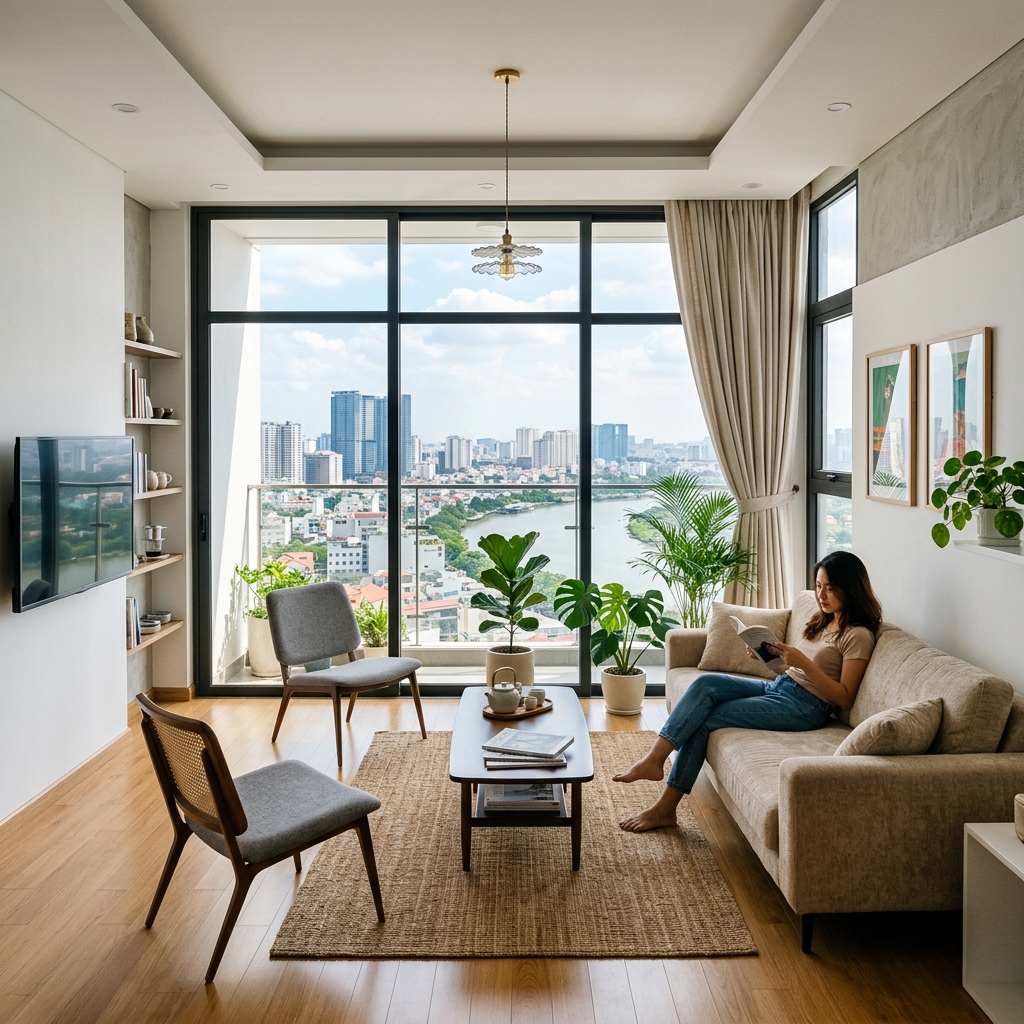
- Housing: Modern 1-bedroom serviced apartment or high-rise condo ($450–$750).
- Food: A mix of local food stalls, casual Western cafes, and local supermarket groceries.
- Transport: Rented or owned modern automatic scooter with occasional GrabBike/GrabCar use.
- Lifestyle: Moderate social dining, gym membership, regular AC use, and occasional weekend domestic travel.
3. Higher-Comfort Profile ($1,800 - $2,800+ / month)
This budget accommodates a lifestyle with fewer tradeoffs, premium spaces, and convenient habits.
- Housing: Luxury high-rise condo or premium serviced apartment in central expat hubs ($800–$1,500+).
- Food: Frequent dining at Western restaurants, imported gourmet groceries, and premium coffee delivery.
- Transport: Frequent GrabCar/taxi usage, private drivers, or high-end scooters.
- Lifestyle: Active nightlife, coworking space hot desks, private international clinics, and frequent travel.
Example Monthly Budget Allocation
This table demonstrates how a hypothetical budget of approximately $1,450 per month might be allocated for a single expat under the Comfortable Expat Profile. Rents and prices fluctuate dynamically.
| Category | Monthly Estimate (USD) | Planning Assumptions |
|---|---|---|
| Housing (Rent) | $550 | 1-Bedroom serviced apartment in a Tier 1/2 neighborhood |
| Utilities (Electricity & Internet) | $80 | Varied based on AC usage; landlord utility billing |
| Food (Groceries & Dining Out) | $400 | Local market ingredients mixed with Western restaurant visits |
| Transportation | $70 | Scooter rental, fuel, and occasional Grab rides |
| Phone & Mobile Data | $10 | 4G/5G high-speed local data package |
| Health & Insurance Reserve | $100 | Pro-rated premium or savings fund for medical expenses |
| Social & Entertainment | $120 | Casual drinks, cafes, cinema, and hobbies |
| Household & Miscellaneous | $40 | Basic supplies, laundry, and toiletries |
| Travel & Admin Reserve | $80 | Pro-rated allocation for visa renewals and weekend trips |
| TOTAL | $1,450 | Reconciles within the comfortable expat planning range |
Note: Stated estimates are shown in USD for planning convenience. The primary currency of Vietnam is the Vietnamese Dong (VND). Exchange rates move dynamically; for these estimates, we assume a baseline rate of $1 USD ≈ 25,000 VND based on August 2026 market ranges. Check current rates before converting.
Key Budget Categories Broken Down
1. Housing Costs
Rent represents your single largest monthly line item. Rents depend heavily on city, neighborhood, building age, amenities, and whether you source through local-market or expat-focused channels.
- Serviced Studios: $105 - $450/month
- Modern High-Rise Condos: $500 - $1,200+/month For a comprehensive strategy on avoiding rental pitfalls, security deposits, and leases, read our complete Vietnam Housing Guide.
2. Food & Dining
Food costs are highly behavior-driven rather than fixed:
- Local Routine: Street food and cooking with local market vegetables costs roughly $150–$250/month.
- Mixed Routine: A balanced mix of local meals, Western dinners, and imported supermarket products averages $300–$500/month.
- Imported Routine: Dining exclusively at Western establishments, ordering gourmet deliveries, and purchasing imported brands averages $600–$1,000+/month.
3. Transportation
Navigating Vietnam has a distinct budget split:
- Motorbike Rental: Expect $50–$80/month for a scooter, plus $15/month for fuel. Motorbike transit carries high traffic risks; prioritize safety, licensing, and protective gear.
- Ride-Hailing (Grab/Xanh SM): GrabBike is highly cost-efficient. GrabCar or traditional taxis are comfortable but can easily total $150–$300/month if used daily. Read about airport arrivals and local transport configurations in our Travel Hub.
4. Utilities and Air Conditioning
Landlord utility billing represents a key variable. While the State electricity body (EVN) sets standard residential tiers, some landlords bill tenants a flat rate (typically 3,500 to 4,500 VND per kWh).
- Electricity: Can range from $30 (minimal AC) to $150+ per month (running multiple AC units 24/7).
- Water & Trash: Often flat-billed by landlords at $5–$15/month.
- High-Speed Fiber Internet: Usually $10–$20/month if not included in rent.
5. Healthcare and Insurance
Expat health insurance is a vital budget buffer. Basic emergency care is affordable in local hospitals, but private international clinics carry rates comparable to Western countries. Maintain an emergency medical reserve or secure international insurance. Learn more about healthcare facilities in our Medical Tourism Guide.
6. Visas and Immigration Fees
Immigration costs fluctuate according to your legal stay pathway. Keep these admin costs separate from your daily living budget as policies change. Review official immigration portals and processes on the Vietnam Visa Guide.
Plan your move without the guesswork
Get the free relocation guide for a clear breakdown of housing, visas, costs, and daily life, or book a consult for direct help with your exact Vietnam plan.
Costs People Forget (Arrival & Irregular Setup)
When evaluating affordability, distinguish ongoing monthly expenses from initial setup outlays:
- Security Deposits: Typically 1 to 2 months of rent upfront (varies by landlord).
- First-Month Buffer: Temporary hotels and scouting accommodations while securing an apartment.
- Household Setup: Blankets, kitchen tools, drinking water setups, and local SIM cards.
- Emergency Fund: Travel contingencies, electronic repairs, or sudden medical outlays.
Housing-Relevant City Trade-offs
According to the General Statistics Office (GSO) of Vietnam, regional price indexes vary across the country. In my expat experience, housing and lifestyle choices change the cost structure by city:
- Ho Chi Minh City: Offers the largest volume of high-end serviced housing and professional networking opportunities. However, lifestyle creep is easy here, and long commute distances make neighborhood selection critical.
- Hanoi: Deeply atmospheric with strong traditional culture. Commutes and air quality (AQI peaks in winter) matter heavily; building styles range from historic tube houses to modern suburban developments.
- Da Nang: Offers excellent lifestyle value, balancing beach access with local market pricing. Short-term tourism spikes can affect seasonal rental availability.
Start planning your location strategy on the Start Here Plan and the Relocation Roadmap.
Decision Guide: How Much Should You Budget?
| Select the Lower Budget if: | Select the Middle Budget if: | Select the Higher Budget if: |
|---|---|---|
| • You rent a simple local studio | • You lease a modern 1-bedroom condo | • You rent a premium high-rise apartment |
| • You eat mostly street food | • You eat a mix of local and Western food | • You eat frequently at Western restaurants |
| • You drive a rented scooter | • You mix scooter riding with Grab rides | • You rely extensively on GrabCar rides |
| • You keep air conditioning usage low | • You run AC comfortably | • You run AC constantly without concern |
About the Creator
Kevin “KT” Thornton is the founder of The Story of KT. He has lived in Ho Chi Minh City for almost seven years, sharing practical relocation, housing, visa, and lifestyle insights. Learn more about the project's background here.
[!NOTE] Legal & Financial Disclaimer: This page details practical budgeting and planning experiences. The Story of KT does not provide legal, financial, immigration, or medical advice. Exchange rates, rental pricing, utility billing, and visa policies fluctuate. Consult official government channels and qualified professionals before signing agreements.