How to Move to Vietnam & Relocate
A complete guide to planning your relocation to Vietnam. Step-by-step walkthroughs for visas, cost of living, choosing a city, renting apartments, and settling in.
Based on almost seven years of living in Vietnam and helping other expats plan their moves here.
Explore relocation resources
Kevin “KT” Thornton
Founder of The Story of KT
American expat based in Ho Chi Minh City with almost seven years of first-hand experience living in Vietnam.
How do I move to Vietnam?
Relocating to Vietnam is a multi-step planning process, not just a single visa application or apartment rental choice. Based on first-hand experience, here is KT’s practical planning sequence:
Moving to Vietnam in 2026? Start here.
If I had to move to Vietnam again today, I would approach the process in a very different order. This video walks through the same framework I recommend to people who are seriously considering the move.
Who this page is for
Find the relocation profile that fits your plan to see how to approach your move.
Retirees
People considering Vietnam for a lower-cost lifestyle, daily convenience, healthcare access, climate, and long-term quality of life.
Remote Workers
People earning income outside Vietnam who need to think through city choice, internet, routine, budget, housing, and legal stay options.
Teachers & Job Seekers
People considering teaching English, working for a Vietnamese employer, or pursuing another legal employment path.
Entrepreneurs
People interested in building or operating a business in Vietnam who need to understand that business registration, work authorization, tax, and immigration are separate issues.
Families
People moving with a spouse, children, or other family members who need to consider housing, schools, healthcare, transportation, and a larger relocation budget.
Lifestyle Movers
People who simply want a different life and are still deciding whether Vietnam is a good long-term fit.
When planning turns into action
You can research visas, neighborhoods, and costs online. At some point, you may need a real person on the ground. The Story of KT can help connect you with trusted local professionals for housing, visa support, transportation, translation, insurance, and local setup based on your city and situation when there is an appropriate fit.
How to Move to Vietnam: The Practical Order
Most people make relocation harder by starting too far down the list. Before you sign a lease or book a one-way flight, work through these decisions in the right order.
City Fit
Identify the lifestyle, climate, and pace you prefer. Avoid picking a city sight-unseen or assuming they are all similar. Compare options on the Start Here page.
Visa Runway
Identify your legal visa path (work permit, investor, family, or tourist e-visa runway). Avoid relying on undocumented promises or unverified agents. Check the comprehensive Vietnam Visa Guide.
Real Budget
Estimate your monthly living costs and backup cushion. Avoid underestimating utilities, health insurance, or localized setup fees. Read our breakdown on the Cost of Living in Vietnam.
Housing & Neighborhoods
Choose your district and housing style. Avoid signing a long-term lease online without visiting the property and surrounding streets in person. See the guide to Finding Housing in Vietnam.
Scouting Trip
Run a low-commitment trial run to test the neighborhood fit, traffic, and climate before shipping belongings or packing up. Learn about planning a Scouting Trip.
Arrival Setup
Organize airport support, transit, temporary lodging, and local orientation. Avoid airport taxi lines or landing without connectivity. Explore Arrival Support.
Relocation Services
Consider professional guidance for complex setups, documents, or custom introductions. See how we can help on the Services page.
Early Stage Planning
Get the structured checklists and resource sheets to map your move months in advance. Download the Free Relocation Guide.
Vietnam Relocation Blueprint:
Moving to Vietnam is easier when you handle the decisions in the right order. Start with city fit and legal entry options, then build your budget, arrive temporarily, inspect housing in person, and handle local setup after landing. Based on almost seven years living in Vietnam, I recommend treating the first 30 to 90 days as a test-and-adjust period rather than trying to solve everything before your flight.
How to Relocate to Vietnam: Essential Steps & Guidelines
Relocation to Vietnam is an exciting journey, but success requires aligning your visa strategy, landing budget, and housing search in the correct order. Below is a breakdown of what you need to understand to successfully organize your Vietnam relocation.
1. Vietnam Relocation Visa Pathways
To successfully relocate in Vietnam, you must understand your visa runway. There is no generic long-term tourist visa or simple retirement visa pathway. Most expats enter on a standard tourist e-visa (valid up to 90 days) while preparing their formal status. Visa and residence rules can change. Verify current requirements through official Vietnamese authorities (such as the Vietnam Immigration Department / Ministry of Public Security or official e-visa portal) or a qualified professional before making travel or employment commitments. Long-term stay pathways require legal sponsorship:
- Work Authorization: Sponsored by a licensed Vietnamese employer or international school (Work Permit + Temporary Residence Card).
- Business Sponsorship: Registered business investors or legal entities (Investor Visa).
- Family Visas: Available to spouses or children of Vietnamese citizens (5-year Visa Exemption or TRC).
For details on exemption rules, portal forms, and border run logistics, check out the comprehensive Vietnam Visa Guide.
2. Expat Cost of Living & Landing Budgets
A realistic budget is a cornerstone of any relocation plan. While daily living costs are highly affordable, arriving with insufficient landing capital can cut your relocation short. A standard monthly budget for a single expat ranges between $1,000 and $2,000 USD as a practical planning estimate, depending on your lifestyle and choice of city. Keep in mind that your final numbers will vary depending on your choice of housing standard, target district, eating habits (local street food vs western restaurants), transport mode, healthcare/insurance choices, travel habits, and family size:
- Da Nang & Coastal areas: $1,000 – $1,500/month (relaxed coastal lifestyle, lower rent).
- Ho Chi Minh City & Hanoi: $1,500 – $2,500/month (metropolitan areas, active nightlife, modern high-rises).
Read our in-depth analysis on the Cost of Living in Vietnam to plan your exact monthly budget.
3. Finding Housing & Rental Strategies
Never rent an apartment sight-unseen before you land. Photos and descriptions on local websites often differ from reality, and surrounding street noise (construction, morning markets) can only be verified in person.
The best strategy is to book a hotel or service apartment for your first 1-2 weeks. Use this time to explore expat neighborhoods and work with trusted local rental agents to view properties. Learn more about leases, deposits, and neighborhood comparisons in our guide to Finding Housing in Vietnam. If you are still unsure about your city, neighborhood, budget, or day-to-day fit, a scouting trip can be a better next step than making long-term commitments from overseas.
What your first 90 days should look like
First 72 Hours
Focus on SIM/connectivity, airport transport, checking into temporary accommodation, and basic neighborhood orientation.
First 2 Weeks
Explore target neighborhoods at different times of day, inspect apartments in person, compare commute patterns, and understand rental terms.
First 30 Days
Settle your long-term housing lease (if appropriate), evaluate actual local living expenses, understand utilities, and register with local services.
Days 30–90
Reassess your fit with the city's climate, culture, and pace. Review your legal stay runway and visa status, and decide whether a longer-term relocation is right.
4. Selecting a Location: Vietnam's Expat Cities
Choosing where to live depends on your career, climate preferences, and daily speed of life. Read our specific city guides to evaluate the hubs:
- Ho Chi Minh City Expat Hub: High-energy urban environment, prime job opportunities, and extensive expat networking.
- Hanoi Expat Hub: Rich cultural heritage, distinctive seasonal changes, and an established expat community.
- Da Nang Expat Hub: Coastal relaxation, beach access, clean air, and a balanced lifestyle.
Frequently Asked Questions: Relocation to Vietnam
How do I legally relocate to Vietnam? expand_more
What is a realistic budget to move to Vietnam? expand_more
Can digital nomads work legally in Vietnam? expand_more
What should I do first before moving? expand_more
Want to map your move step-by-step?
Grab the Free Relocation Guide for a complete milestone roadmap, or schedule a Move Clarity Call to review your visa strategy, housing, and budget in a private session.
Your 90-Day Pre-Move Plan
A step-by-step checklist to organize your preparation before you leave and immediately after you arrive. This checklist is different from the on-the-ground 90-day test.
90 Days Before
Start researching your choices early to verify that the core parts of your move align with your goals.
- check Compare two or three possible cities
- check Check your realistic visa options
- check Build your move budget
- check Review health insurance and healthcare needs
- check Decide what documents you may need
30 Days Before
Finalize your logistics, paperwork, and short-term stay details so you have a soft landing.
- check Prepare important documents
- check Book one to two weeks of temporary accommodation
- check Plan airport transportation
- check Make sure your bank cards will work abroad
- check Set up a backup way to access money
First Week
Focus on establishing daily connectivity and transit options when you arrive.
- check Set up reliable mobile data
- check Install Grab and/or Xanh SM
- check Learn your neighborhood
- check Check ATM and bank fees
- check Start exploring areas where you might actually live
First Month
Explore neighborhoods and check rental properties before making long-term agreements.
- check Compare neighborhoods
- check View several apartments
- check Understand lease terms before paying a deposit
- check Establish a normal daily routine
- check Review whether the city actually fits your lifestyle
The KT 90-Day Vietnam Test
Do not judge your new life based on your first week.
STABILIZE
Learn transportation, neighborhood, daily logistics, food, shopping, basic routines, and necessary setup. Do not make unnecessary long-term commitments immediately.
BUILD YOUR REAL ROUTINE
Start living like a resident instead of a tourist. Work normal hours, exercise, shop normally, build social routines, experience boring weekdays, and track real spending.
DECIDE
Ask: Do I actually like this city? Does my budget work? Is my legal stay strategy sustainable? Does this lifestyle fit what I came here for? Decide whether to stay, change neighborhoods, try another city, or reconsider the move.
Compare major expat cities
See how Ho Chi Minh City, Hanoi, and Da Nang stack up side by side.
| Metric | Ho Chi Minh City | Hanoi | Da Nang |
|---|---|---|---|
| Cost of Living | $1,200 - $2,000 / mo | $1,100 - $1,800 / mo | $900 - $1,500 / mo |
| General Feel | Fast-paced, modern, commercial, active nightlife | Traditional, rich culture, seasonal weather, slower pace | Relaxed, beach-coastal, outdoorsy, slower lifestyle |
| Weather | Tropical (Wet & Dry seasons), hot year-round | 4 distinct seasons (cold winter, hot humid summer) | Coastal tropical (warm summers, mild rainy winter) |
| Traffic & Pollution | Dense traffic, moderate-high air pollution | Very dense traffic, high air pollution in winter | Lighter traffic, cleaner air quality |
| Typical Fit | Professionals, business founders, active networkers | Culture lovers, teachers, traditionalists | Nomads, families, beach lovers, retirees |
Vietnam is bigger than these three cities.
Ho Chi Minh City, Hanoi, and Da Nang are the places most foreigners start researching, but they are not your only options. The Story of KT is expanding its city coverage to help you compare more places before deciding where to live.
Do not choose an apartment before you understand the neighborhood
A good apartment can still be a bad fit if the neighborhood, commute, noise, traffic, services, or daily routine do not work for you.
Start with temporary accommodation
Book a short-term place for your first week or two. Use this time to explore the city without pressure.
Visit neighborhoods during the day and at night
Check noise levels, traffic congestion, and local access to markets, shops, and hospitals at different times of the day.
Compare multiple properties
Do not settle for the first property you see. Inspect multiple places to understand value and price options.
Understand deposit and lease terms
Be clear on security deposits, utilities, maintenance fees, and exit conditions before committing to a lease contract.
Verify what is included in rent
Check if electricity, internet, water, cleaning, management fees, or parking fees are included in your monthly lease payment.
Do not send large deposits simply because an online listing looks good
Avoid sending money from abroad before visiting the property in person and verifying property details directly.
Understand your visa runway before you move
Your entry visa and your long-term plan are not automatically the same thing. Before moving, understand how you are entering Vietnam, how long you can legally stay under that status, and what legitimate longer-term options may apply to your circumstances.
Visa rules can change and eligibility depends on your nationality and individual situation.
Visa information can change. Always verify current requirements through official Vietnamese government sources, the appropriate embassy or consulate, or a qualified immigration professional before making legal or financial decisions.
Know your real move budget
Separate your setup and arrival costs from your monthly living needs.
Arrival Money
Flights, luggage, airport transportation, and temporary accommodation.
Housing Setup
Initial rent, deposits where applicable, and basic setup costs.
Monthly Life
Housing, food, transportation, healthcare/insurance, entertainment, and normal personal expenses.
Emergency Money
Money you do not rely on for normal monthly spending.
"Your budget should give you options."
Your first 72 hours in Vietnam
Focus on basic setup steps during your first three days.
Airport transportation
Arrange airport transfers before landing to avoid transport issues.
Temporary accommodation
Stay in a short-term hotel or apartment for initial weeks.
Phone / eSIM / SIM
Buy a local SIM card with registered data at an official shop.
Access to money
Have cash on hand and check which ATMs offer lower fees.
Food and essentials
Locate nearest grocery stores and convenient local shops.
Basic transportation apps
Install Grab or Xanh SM for rides before leaving the airport.
"Arrival day is not apartment-hunting day."
Take time to rest before making major decisions.
Common relocation mistakes to avoid
Skip the expensive, stressful errors most newcomers make in their first 90 days.
Choosing a city based only on YouTube
Video content does not show the humidity, noise, pollution, or social isolation. Visit the city first.
Signing a lease before seeing the neighborhood
Signing a long lease online can leave you stuck near noisy construction or local flood zones.
Building a visa plan from outdated social media posts
Rules change quickly. Relying on old forum threads can lead to immigration complications.
Moving with no emergency reserve
Medical situations or sudden return trips require backup cash that is separate from monthly expenses.
Treating a vacation budget like a relocation budget
Setup expenses, deposit charges, and paperwork costs are different from hotel and restaurant rates.
Making major commitments during the first week
Buying motorbikes, paying deposits, or locking in long contracts early on increases setup risks.
Assuming someone else's Vietnam experience will automatically be yours
Everyone has different preferences for climate, social groups, routine, work structure, and budget models. Learn what fits you.
Watch the Move to Vietnam Series
Deep dives into budgeting, housing, city choice, and step-by-step relocation strategies.
Choose the level of help you need
Actionable resources and guidance options to help you plan your relocation.
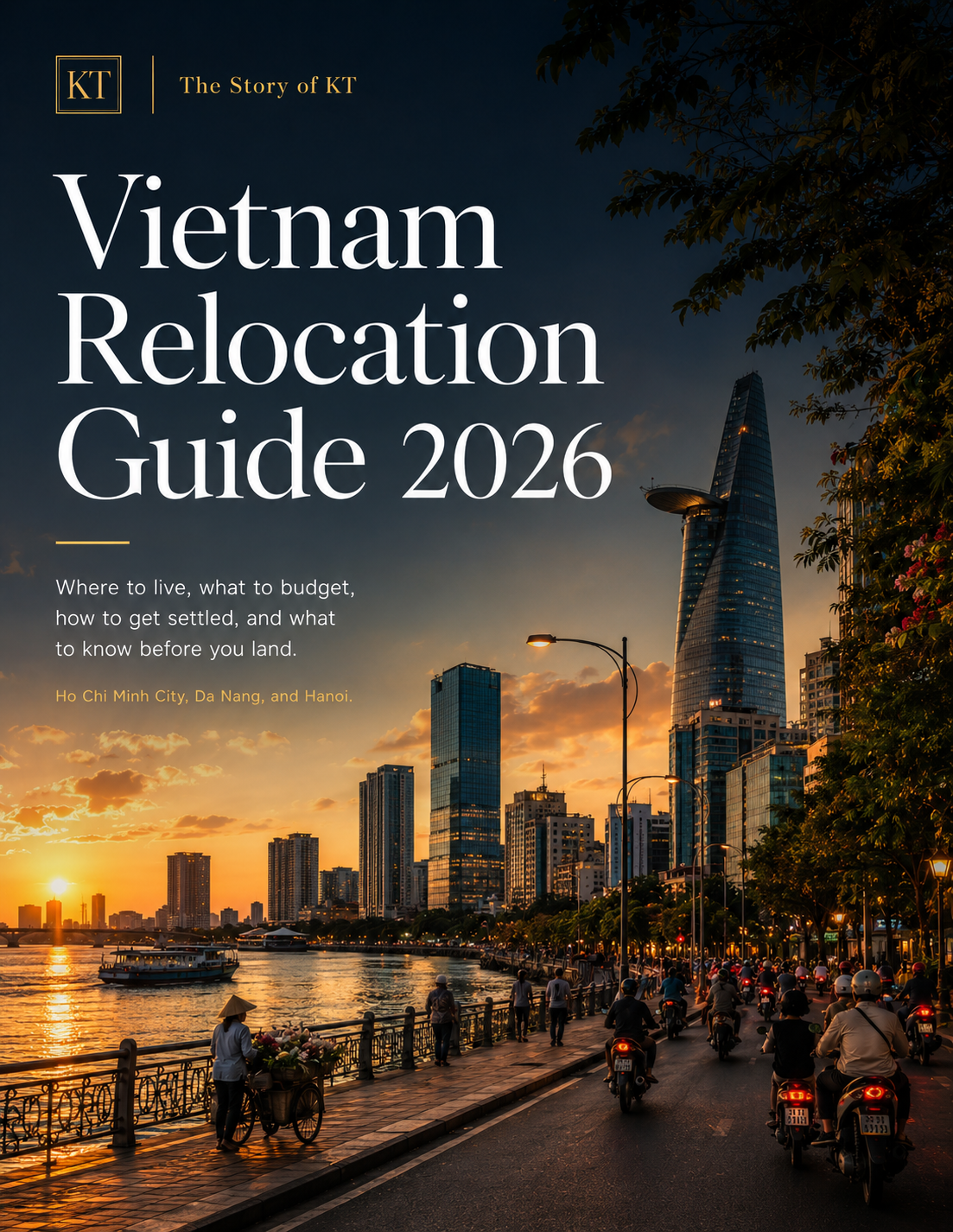
Free Vietnam Relocation Guide
Start with the basics before making decisions about cities, housing, visas, budget, and your first steps in Vietnam.
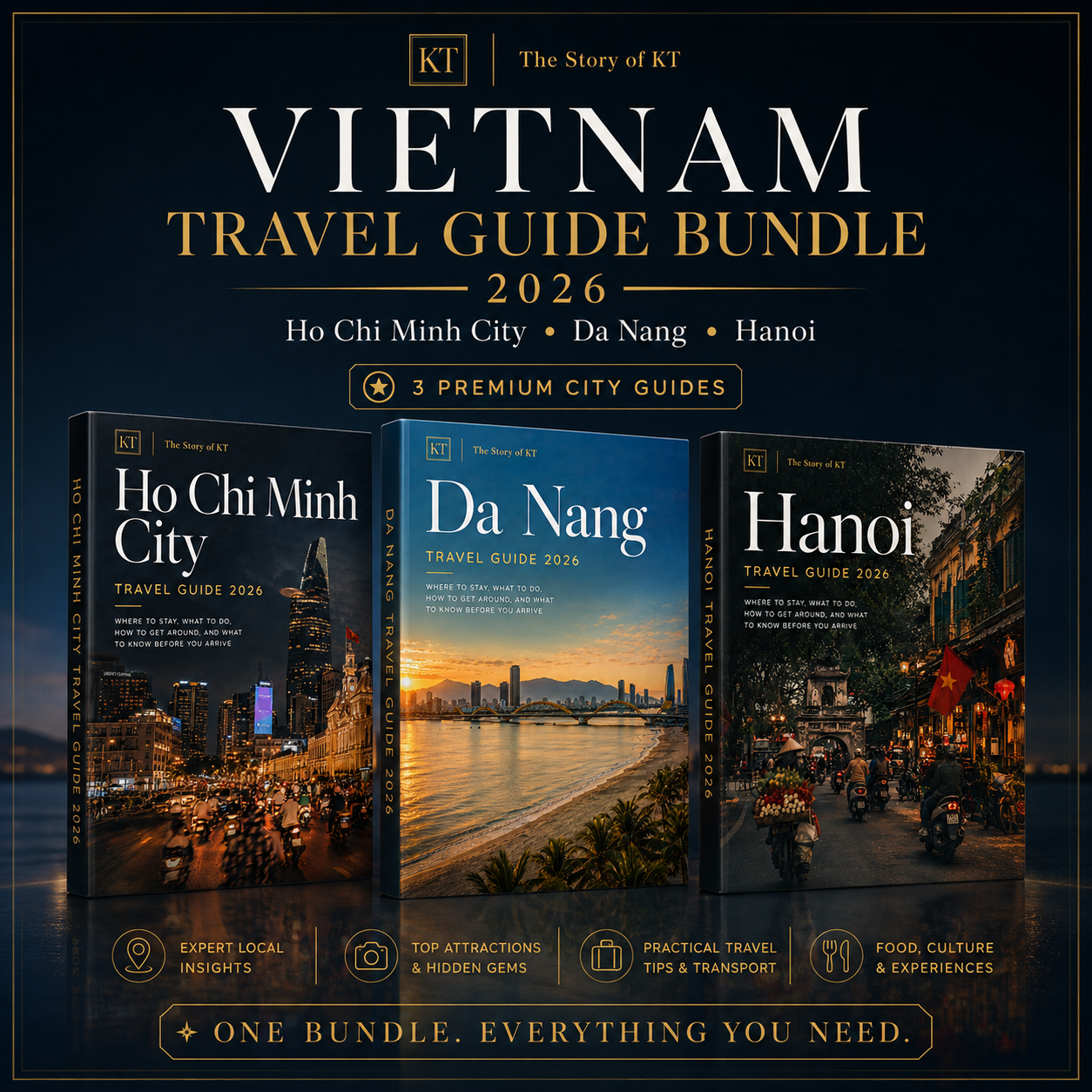
Vietnam City Guides
Plan your scouting trips with deep city-by-city comparisons of HCMC, Da Nang, and Hanoi.
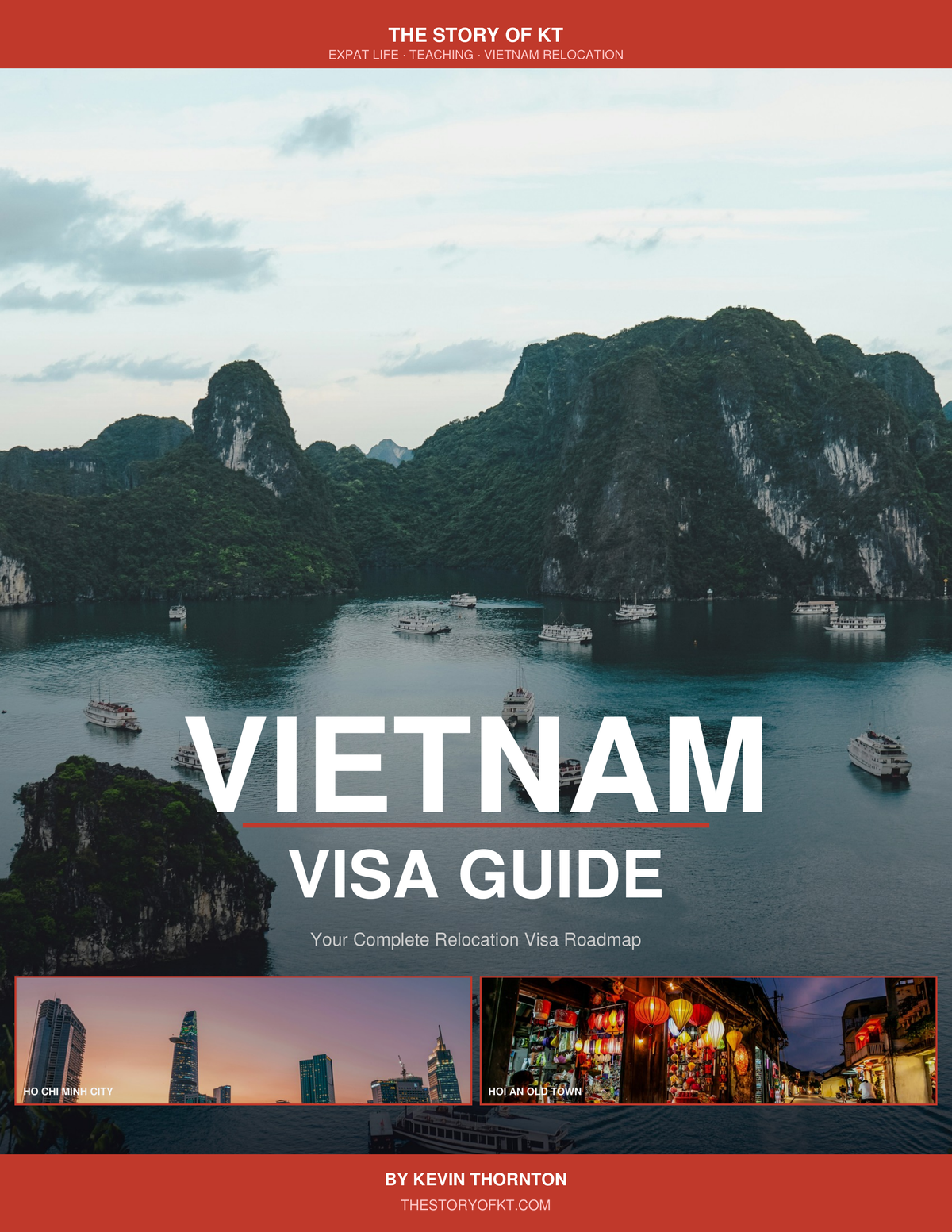
Vietnam Visa Guide 2026
Understand your Vietnam visa runway, document prep, common mistakes, and when to use a qualified visa agent.
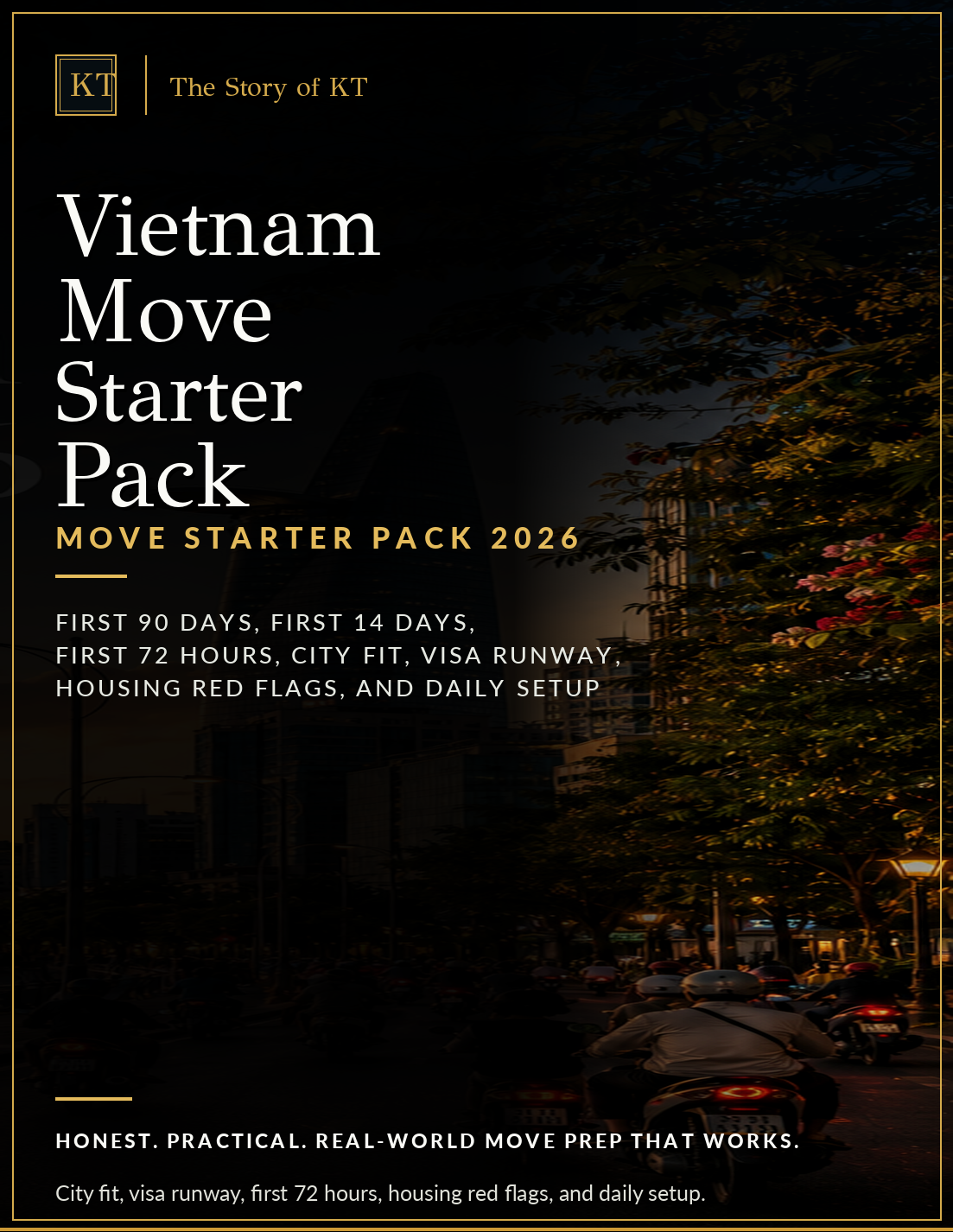
Vietnam Move Starter Pack 2026
Plan your first 90 days, first 14 days, first 72 hours, city fit, visa runway, housing red flags, and daily setup before you arrive.

Move Clarity Call
Private guidance with KT for people who are seriously planning a move and need help thinking through their city, budget, timeline, visa questions, housing strategy, or first steps.

Relocation Support
For people who want more hands-on help with planning and arrival.
Explore all The Story of KT Vietnam resources
Find the Move Starter Pack, Visa Guide, city guides, dating guides, and other practical Vietnam resources in one place.
Ready to start planning your move?
You do not need to have everything figured out today. Start with the level of help that matches where you are now.
Get the Free Guide
Download the Free Vietnam Relocation Guide to start building your move blueprint.
Explore Resources
Get the Move Starter Pack, Visa Guide, and city guides in The Story of KT Store.
Book a Consult
Book a private Move Clarity Call with KT to get answers for your exact relocation plan.
See the real cost of living in Vietnam
Start with KT's existing Hanoi cost-of-living breakdown, then compare costs against your chosen city, lifestyle, and current rental listings.
Watch the cost breakdownGet the free relocation guide